
FOOTBALL . . . WHY?
In the Midwest, you need to know something about football. You don’t need to know much.
Here’s what you need to know today:
1. Rich Rodriguez — the just-fired Michigan football coach — is going to the University of Pittsburgh, where the brand-new Pitt coach allegedly beat up a woman and just got fired. (This is speculation, the Rich-to-Pitt bit.)
2. The Big Ten has 12 teams. The league should add the University of Toledo and put a lid on new powerhouses.
3. I told my sons I was going to watch the Mississippi State – Michigan game on New Year’s. They laughed at me. Who cared about that game, they said. (I didn’t dare watch.)
4. My Ohio State-alum dad, of blessed memory, is breathing easy for another year; Ohio State beat Arkansas in the Sugar Bowl.
5. The Sugar Bowl is the Allstate Sugar Bowl. Next year take a charter flight to the Manischewitz Borscht Bowl. Everybody wears pink and knocks back “l’chaim” vodka shots. It’s in Pinsk.
6. My former neighbor, a rabid Michigan fan, lit a votive candle after every Wolverines touchdown. The candle triggered a music box that played the Michigan fight song. Those were the days. Michigan won a lot. (About four years ago.)
7. What’s Michigan going to do for a coach? You tell me.
 8. If you want to see real, quality, cheatin’ football, go down south.
9. Maybe you don’t want to see football. Then please see the Weekend Klezmer Report,
item #10:
10. Klezmer star Michael Winograd is bar-storming the West Coast, playing nearly every bar and bar mitzvah between Los Angeles and Oregon. Tomorrow The Wino is at Havurah Shir Hadash in Ashland, Oregon. Kikhl-off is 8 p.m.
[Kikhl is “sugar cookie.”]
—-
Thanks to journalist Stan Urankar for the Rich Rod–to-Pitt tip.
January 7, 2011 2 Comments
YID LIDS
Maybe a collage artist can do something with my yarmulke collection, from 22 years’ worth of gigs. I know an artist — a bad one — who did something with old saxophone reeds.
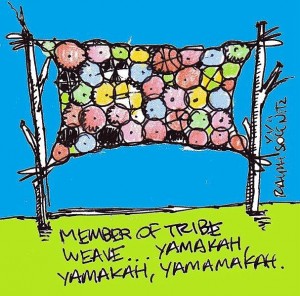 My Guatemalan yarmulkes, crocheted by Mayan Indians, are from neo-hippie weddings. There are no bouquet tosses, garter-belt strip routines, or formal introductions at these weddings. The Mayan kippot (yarmulkes) are particularly popular with female rabbi brides. That’s a niche — weddings of women rabbis — that Yiddishe Cup has cornered in the Midwest.
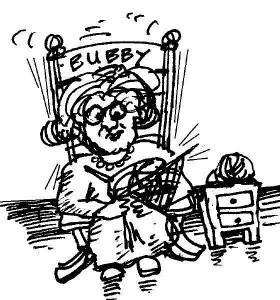 The most heymish lids are grandmas’ knitted yarmulkes.
My blue suede yarmulkes are from A-1 Skull Caps. The lids don’t breathe. Skull cap. I like a yarmulke that breathes.
Camouflage kippahs exist, too. One Yiddishe Cup musician, a pacifist, declined to wear his camo lid at a Zahal-themed bar mitzvah. Zahal is the Israel Defense Forces (IDF). The bar mitzvah boy’s father wore combat boots and a full Israeli uniform. The band wore IDF T-shirts and camouflage yarmulkes. (Nobody noticed our musician in street clothes.)
 I have six purple kippot from a bar mitzvah. I thought the band might want to wear the lids again at another bar mitzvah. Go for the clean David Clark Five look. The guys declined.
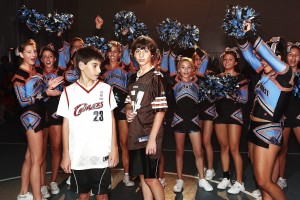
We wore sports yarmulkes — plus basketball jerseys — at a sports-themed bar mitzvah party. The party even had a cheerleading squad:
Mazel tov / Let’s shout hurray / It’s Jeremy and Sam’s bar mitzvah day!
I say oy / You say vey / Jeremy and Sam are men today!
Yiddishe Cup’s keyboard player, Alan Douglass, frequently asks, “Is this a yarmulke gig?” He’s a goy and can’t figure out what’s up with the various Jewish denominations.
My Conservative rabbi wears a throwaway satin lid that funeral homes and synagogues give out. He apparently doesn’t want to look different from his congregants. I haven’t asked yet — after 20 years — why he wears the throwaway.
My white satin yarmulke from Dec. 9, 2007 has “Ananth Uggirala” — the groom’s name — in it. The groom’s parents were Anjaneyulu and Manorama Uggirala. I had to announce them. Tip, please.
You need good hair clips for a yarmulke. Bobby pins are the worst; they take your hair out with the yarmulke. Duck bill clips – also no good. The best clips are the surfboard barrettes. If you don’t have these clips, get some, particularly for outdoor gigs.
If you drop a yarmulke, you don’t have to kiss it before putting it back on. A lid is a lid. It’s not a holy object. Also, goys, wear the lid at the wedding ceremony; you’re not exempt.
At an American-Israeli wedding, one of the chuppah (bridal canopy) bearers smoked and balanced a drink. His yarmulke fell off. Secular Israelis, they’re funny that way.
It’s shocking when you see an Orthodox guy without a lid. For instance, an Orthodox man might go into a non-kosher restaurant on a road trip and take his yarmulke off. (Some Orthodox, when in the sticks, will go to a fast-food place for a salad.)
I wore a yarmulke for a week when I hitchhiked the coast of California in my twenties. I had seen a photo of Bob Dylan wearing a yarmulke at the Western Wall. Dylan did yahm-ops at The Wall every couple decades, it seemed.
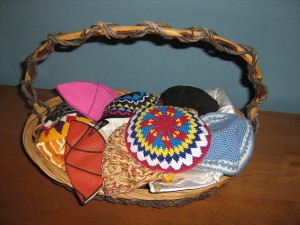
My Easter basket of yahms makes for a moderately interesting pop-psych experiment on shabbes: Who is going to take the pink, who is going to take the matzo-textured lid, and who is going to hide behind the black lid?
Have fun with lids. That’s in the Torah somewhere.
January 5, 2011 9 Comments
THE WIN-O-GRAD — A QUALITY CLARINET
[If you came here because of the Cleveland Jewish News, to read about the Fed man’s mega-salary, please click here for the relevant post. If you’re here for other reasons — like you madly love this blog — simply go to the next line.]
Michael Winograd, 28, is one of the best klezmer clarinetists. He plays a handcrafted, custom-ordered clarinet from Canada. The axe looks like a howitzer, sounds tres robust and weighs a ton. It should be in Cooperstown next to Babe’s bat. Winograd‘s clarinet has extra keys to hit extra notes. For instance, the octave key controls two tone holes — not just one — to get perfect intonation.
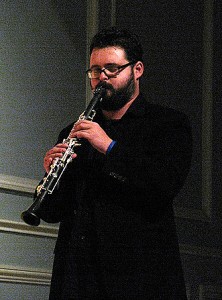
Miguel Winograd
I saw Winograd’s instrument in Cleveland across a living room. I could almost feel its emanations. Yes! A clarinetist and I were about 15 feet from Winograd, and my friend asked what kind of horn Winograd had. I erroneously guessed it was an Albert system horn, like New Orleans jazz musicians used.
There are only about 15 Win-O-Grads in the world, according to Winograd. (Stephen Fox Clarinets, Canada, makes the Win-O-Grad. Fox typically calls the product an “extended-range C clarinet.”)
How does one compete against the Win-O-Grad?
Good question.
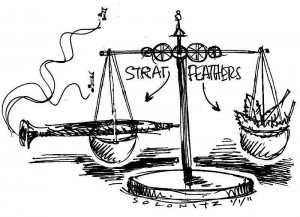 Here’s how: The Strat. The Strat clarinet. (Similar to a Strad violin, but several thousand dollars cheaper.) The keys are molybdenum. The pads are horsehair. The bore – the inside of the horn – is swimming pool liner. The axe is titanium and weighs nothing.
The Strat is excellent for jazz, klezmer or classical. The end of the clarinet (the bell) has a touch pad; press “1” and a music stand appears; press “2,” you get a pre-licked reed; press “3,” your choice of Heineken’s or Coors.
The Win-O-Grad is a shtik pipe cleaner compared to The Strat.
—-
[Shtik means “piece.”]
December 31, 2010 4 Comments
WHAT ARE YOU EATING FOR NEW YEAR’S?
Not all musicians have gigs on New Year’s Eve.
A lot of would-be partiers stay home for a quiet evening, or they go to the movies. There aren’t that many gigs. The era of the fraternal organization New Year’s Eve dinner dance is long gone.
Sometimes people eat special New Year’s Eve foods. I know a family that eats lobster. My family eats oatmeal on New Year’s Eve. We learned that habit in Akron, Ohio.
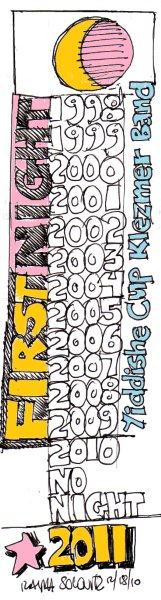 Yiddishe Cup had a gig at First Night Akron for 12 years in a row, and occasionally my family stayed overnight at the Quaker Square hotel, which was in a remodeled Quaker Oats grain silo. The hotel’s New Year’s Eve dish was oatmeal, served at midnight.
Yiddishe Cup didn’t play First Night Akron last year. The event coordinator called and said, “We’re reducing our footprint.”
My wife, Alice, plus a Yiddishe Cup musician and his wife, made a small dinner and then we went to the movies. Not memorable, except for the oatmeal.
Klezmer musicians around the country lamented the downsizing of First Nights. This kvetching started a couple years ago on a Jewish-music listserv. First Nights had been the rage in the 1990s but had become part of the scenery. (Similar to klezmer music’s popularity arc.) In the 1990s, the director of First Night Akron told me she had just been to a national First Night conference in Boston and the word was “get a klezmer band.”
Yiddishe Cup worked up to playing First Night Akron. We played Warren, Ohio, First Night a couple times prior. (A good event.)
Last year I checked out First Night Akron’s program online. I looked to see if another klezmer band was playing. There was a Beatles tribute band, a blues band and a couple generic American acts. That was gratifying.
Yiddishe Cup is back at First Night Akron this year. “Raisins and Oatmeal.” That will be our opening song. No, it won’t. The tune doesn’t exist. We’ll open with
“Shalom Aleichem” — the version made popular by Shmuel Brazil and Regesh.
—-
Yiddishe Cup plays First Night Akron this Friday., 7:30 p.m.
—-
Sports fans, please see the post below too.
December 29, 2010 4 Comments
WAVING O’ THE GREEN
The highest paid Jewish communal worker in America is Steve Hoffman, president of the Jewish Community Federation of Cleveland — a united charities for Jews. Hoffman makes $687,000 a year.
He makes more than double the Atlanta federation president’s salary; 86 percent more than the Detroit chief; 56 percent more than the Chicago president; and more than the boys in New York. [Source: Forward]
This gives Cleveland Jews another excuse not to give tzedakah (charity). Donors want reasons not to give.
“That’s disgusting. He should be in private industry,” said a friend of mine.
Another friend stopped giving to the federation because a volunteer called and asked my buddy to up his pledge. My friend didn’t like the personal touch; he stopped giving altogether.
I asked the federation to switch my pledge solicitor. I was in the federation’s real estate division — where the heavy-hitters are — and I didn’t want a phone call from an owner of a “lifestyle” shopping center, on principle. Now I have a friend who solicits me. And with email, it’s all pretty painless.
I give.
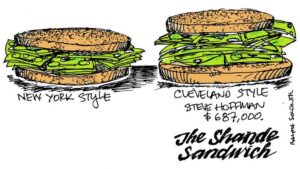 But when I read in the Forward last week that Steve Hoffman is making two cents for every dollar the Cleveland campaign raises, I had second thoughts on Hoffman’s two cents. A sizable chunk of the federation’s annual $28.8 million campaign is going to Hoffman.
On the other hand, Hoffman is no doubt a capable executive, dealing with very finicky donors around the clock. He also oversees the federation’s enormous endowment and philanthropic funds. He was offered $687,000 a year and took it. That’s not a crime. He’s probably a good guy. Just an overpaid good guy.
In my father’s day, the federation published an annual blue book that listed everybody’s contributions. My dad was proud he was “anonymous.” My former rabbi, Michael Hecht, differed. Rabbi Hecht said it was best to attach your name to your contribution so peers would be embarrassed and/or motivated to give more. (The bell rings . . . Rabbi Hecht vs. Maimonides.)
The best place to give — at least in the non-Jewish realm — is to the Salvation Army. The Salvation Army is a religion. The Sallies — the troops — are almost like nuns. The Sallies don’t spend much on overhead. They are in the streets, doling out food. And don’t forget about their brass bands.
Every year I write on my Salvation Army donation: “I’m Jewish.” I got a call from the major once. He didn’t mention the Jewish part.
The most ardent fund-raising drive ever, surprisingly, was at Klezkamp — the artsy klezmer convention. A spirited 80-something New Yorker took center stage and asked for pledges. He announced the pledges and checks . . . $18, $25, $36, $50. A musician gave $5,000. That was Gates-ian. When all the pledges were counted, the speaker said: “Here’s something I learned from our Irish friends. It’s called the waving o’ the green.” He took a dollar from his wallet and waved it. Klezkamp volunteers with buckets circulated through the crowd to collect bills the audience waved back.
It was good theater, somewhat creepy, and somewhat effective. A buck goes into the bucket. “Transparency” in action. Nobody at Klezkamp was making $687,000 from that bucket.
—-
Please see the post below too. It’s fresh paint.
—-
And win a free CD — One Ring Zero’s Planets — by entering Zeek‘s First Klezmer Liner Note Contest. Zeek is a Jewish Journal of Thought and Culture. I wrote the rules for the Zeek contest. Click here to enter, or just to read the nutty rules.
—-
Yiddishe Cup plays First Night Akron (Ohio) 7:30 Fri. , Dec. 31.
December 22, 2010 3 Comments
A WHITER SHADE OF WHITE
A modern apartment is easy to paint. You just roll the drywall.
Prewar apartments, however, can take two days or more. You need to cut-in at the baseboards and at the mullions, and sometimes it’s smart to use two shades of white to contrast the woodwork and the walls.
 sSteve — a West Side apartment painter — has more words for white than Jews have for fool. Steve talks about antique white, Navajo white, pearl white, bone white and pure white (a.k.a. hospital white). [Fool in Yiddish: nar, shlemiel, shmendrik, shmegege, yold.]
The big question at Lakewood Paint and Wallpaper was “Oil or latex?” Another pertinent question was: “Is Dutch Standard the same as Dutch Boy?” No, Dutch Standard is from Canton, Ohio. Dutch Boy is the nationally known subsidiary from Sherwin-Williams, Cleveland.
 Bill, a paint salesman, made regular calls at Lakewood Paint. He said, “I would stick with an alkyd [oil]. You kids will try anything.” He looked at me. “Let me ask you something. Are you a Yehudi? That’s a word only one of us would know. What’re you doing here?” (On the West Side.)
“I work for my old man.” (I was 26.)
“Four years of fun and game at college,” Bill said. “Now look!” He studied my painter’s clothes. “There are only two Yehudis at Dutch Standard. Me and another guy.”
. . . Yehudi Ha-Rishon (The First Jew). That was a Hebrew school primer about Abraham.
Yehudi Ha-Shayni (The Second Jew). That was Bill, who wandered the Northeast Ohio paint-store circuit in the 1970s.
December 17, 2010 1 Comment
CLEVELAND IS NOT A CUPCAKE
A man with a strong Israeli accent called. I thought he wanted to rent a store. A lot of prospective store renters have foreign accents, particularly Middle Eastern.
But the Israeli wanted to talk music. He wanted to sell me a Yiddishe Cup ringtone.
Then I got a call from Elias, who wanted to open a bakery.
“You would be my second Elias!” I said.
This Elias – like the first Elias — was Lebanese.
I’ve also rented to Eli, a driving school operator.
Christian Arabs are often Eli, Elias, or Mike. Or Sammy.
 I rented to Shaukat Ali. Not a Jew. (Not a Christian either.) Ali was a Pakistani computer repairman. He began wearing all white, growing a beard and praying in his store. He lost some business.
Widad called. I asked Widad if that was her first name. Yes. She wanted to open an Arab restaurant. She said, “Have you ever been to the Middle East?”
“Israel,” I said.
No biggie. Most Arab store owners are just trying to make a living.
I once attempted to talk Middle East politics with an Arab tenant. He said, “That’s over there. I’m here.”
Wadid wanted to sign the lease right then. I said, “Whoa, Widad” (to myself). I said, “You’ll need about $100,000 for grease traps, exhaust hoods, upgraded electrical service, architectural drawings, two ADA-approved bathrooms and a fire extinguisher system.”
The restaurant didn’t happen.
***
There were two Ivans, both Croatian shoe repairmen. One was small and friendly, and the other was terrible. He banged so relentlessly on his anvil he nearly drove the photographer next-door nuts. I had the walls soundproofed.
But we purposefully did a shoemaker (a lousy job) on soundproofing the shoe repair store. To soundproof a room correctly, you have to float a new wall and stuff the crawl space with fiberglass, and it still won’t work.
 A friend considered opening a cupcake shop.
Cleveland is not cupcakeville, I thought. I said, “You can go broke with a trendy concept in Cleveland.”
You don’t need cupcakes.
But if you do, there is an excellent Hungarian bakery. You drive by this place for years and don’t even notice it. Tommy’s Pastries, Madison Avenue, West Side. There is nothing in the display windows. Tommy’s makes a zserbó, a chocolate/walnut/apricot dessert.
Zserbó is the Cleveland cupcake.
—–
Bandleader Walt Mahovlich told me about Tommy’s and zserbó. (Pronounced ZHAIR-boh.)
—–
Here’s an amusing new video — and free singing lesson — from Yiddishe Cup’s alternate drummer:
—-
Please see the post below too. It’s fresh goods.
December 15, 2010 4 Comments
WALKMAN MAN
Walt Mahovlich, the leader of the Gypsy-style band Harmonia, had hundreds of cassette tapes in his living room. He had custom-made bookshelves lined with tapes. There were Yugoslavian field recording from the 1970s and commercial ethnic tapes from the 1980s and 1990s. And he had dubbed some LPs to tape.
Walt’s wall o’ tapes was organized by nationality: Albanian, Croatian, Hungarian, Jewish, Macedonian, Romanian, Rusyn, Serbian, Slovak and Turkish.
A tape — a brand-new chrome tape with Dolby — often sounded as good as the original LP. But few dubbers bought chrome. Even the commercial tapes released in the 1980s weren’t always chrome.
One big downside to tape: the tape player would occasionally eat the skinny tape, and you’d have to splice it back to health.
The cassettes, with their cases, were compact. Give them that.
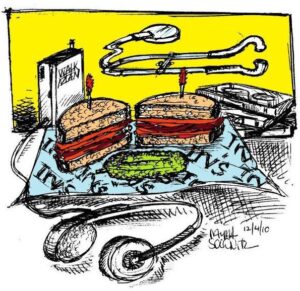 I bought a Sony Walkman cassette player in 1981, just prior to my first son’s birth. My wife, Alice, went through three 24-hour shifts of obstetricians before she delivered. I had the cassette tapes (dubbed jazz LPs) and two corned beef sandwiches from Irv’s Deli. I was set. My wife had complications.
The doctors wanted to check it out. Not the complications. The Walkman. They had never seen one.
Three years ago I bought a Chinese Walkman knock-off for $40 at Radio Shack. I thought the Walkman might disappear.
Sony recently announced the end of Walkman cassette player production.
Two words: Stock up.
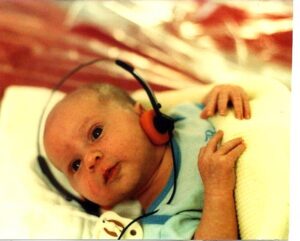
Teddy Stratton, 1 month
***
Walt Mahovlich’s wall o’ tapes still exists in the same West Side living room.
Last week Walt said, “I should transfer my tapes to digital. Who knows how long they’ll last — the tapes. But what I really need to do is record a 78 — something that will really last!”
“You want to record a 78 RPM?”
“Yes. Alan [Yiddishe Cup’s keyboard player] has a 78-making machine. I saw it years ago. I want to record a tune, then prematurely age the disc — the 78 — and place it in strategic places for people to find.”
“Like at Goodwill stores?”
“Maybe. It’ll be a hoax, like Piltdown Man.”
“An original tune?”
“No, a clarinet piece I learned years ago. I’ll call it ‘Der Freylekher Bulgar’ for the Jewish market and ‘Lerinsko Narodno Oro” for the Macedonians. It’ll be the same tune, two markets. Like Tarras.” *
“Do you have a Walkman?”
“No, I’ve never had one.”
“You should get one.”
“I have a tape deck. I’m set.”
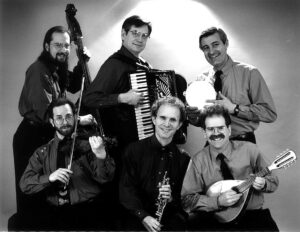
Walt, on accordion, had an aura. 1983
—–
* Dave Tarras, klezmer clarinetist, sometimes “re-gifted” his Jewish tunes to fit the Greek market, and vice versa.
“Der Freylekher Bulgar” is Yiddish for “The Happy Dance.” “Lerinsko Narodno Oro” is Macedonian for “Lerin Region Folk Dance.”
Thanks to Lori Cahan-Simon, musician and Yiddishist, for the correct spelling on “Der Freylekher Bulgar.”
December 10, 2010 3 Comments
MIRROR IMAGES
Yiddishe Cup occasionally plays mirrored halls.
Take La Vera. Or Casa di Borally. Or La Malfa (no mirrors but still heavy Italian).
Our latest mirrored hall gig was Armenian. Yiddishe Cup knows two Armenian tunes, which gets us through the night. We mix them with klezmer, jazz and pop.
I’m not bad on “Cold Duck Time” by Eddie Harris. Not good either.
I thought there were 300 people at the La Vera gig, because of the mirrors. There were about 150 people.
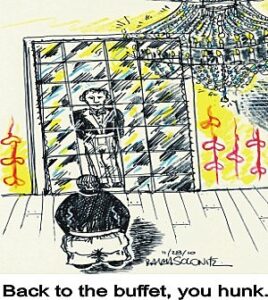
A guest asked if Yiddishe Cup is available July 11, 2011, for his daughter’s wedding at La Malfa. Yes, La Coppa Yiddishe is available, and call soon. July 11 is “tomorrow” in the band biz.
***
The premier mirrored hall in Ohio is the Hall of Mirrors at the Hilton Netherland Plaza in Cincinnati. That mirrored hall, built in 1931, is modeled after the Palace of Versailles.
Yiddishe Cup played a wedding in the Cincy hall for the great-grandchild of Arnold Schoenberg. A guest even sang a medley of Schoenberg art songs midway through the reception. That was a bigger party-killer than benching (post-meal prayers).
Yiddishe Cup is playing a Cincy wedding tomorrow night at the National Underground Railroad Freedom Center. We’ve never played there. Mirror situation, per favore?
—-
Illustration by Ralph Solonitz.
December 3, 2010 4 Comments
THE TOP 10 JEWISH ALBUMS
OF 2019
My apologies for not reviewing klezmer albums more frequently. My computer keyboard needs de-icing. There’s bad weather here. But no more excuses. Here are the best Jewish recordings of 2019.
1. Jews with Bagels. The Klezmatics cruise down the MOR (middle of the road) here, looking for the big paycheck– the one with six bagels after the “1.” Sure hit: “Tiny Bagels in the Wine.”
2. We Can’t Hear You. Klezmer Conservatory Band. This beloved group still pops, babbles and spits like a newborn. Recorded in a nursing home, in bed, in PJs. Hef feel. Swings.
3. Music for Young Lovers from Northern OH, Western PA and Western NY. Funded by NELFTY (Northeast Lakes Federation of Temple Youth). The record is lively waltzes and ballads for teens to cruise to. Not sure if this recording will keep the kinder from moving to Chicago and the East Coast, but it’s worth a try.
4. Ladder Me Up. Andy Statman’s homage to The Chief. If you buy this one, you can skip shul for six weeks.
5. The Great Hang. Steven Greenman’s triple CD. All originals, recorded in a single weekend (i.e. the great hang). Violinist Greenman sings on several tracks. Heavy breathing. Sexy. Not bad violin, either.
6. Lee Tully vs. Billy Hodes. Reboot. These two obscure 1950s Jewish comedians come out swinging. Tully’s version of “Essen” versus Hodes’ take. Two Jewish fighters in the same ring. You don’t see that every day unless you’re at an Orthodox shmorg (pre-wedding buffet). Hodes wins.
7. Jerzy Kosinski’s Ketchup. Daniel Kahn. What’s the difference between blood and ketchup? Are Heinz and Hunt’s the same thing? How’s the pourability? Where did green ketchup go? This recording is viscous . Check it out.
8. It’s All Greek. A bootleg from England. This double CD has 56 never-released Mickey Katz songs recorded for the Greek market. Includes “Open Half a Day on Sunday” and “My Gyro is Dripping.”
9. Readings on the Klezmer Generation. Bert Stratton’s cabaret show, recorded live at Nighttown in Cleveland. Stratton has a strange voice, as if he swallowed a bag of plastic Passover plagues. Painful on first listening, but after four cups of wine atrociously on-target.
10. The Jewish People are Mio. Roberto Rodriquez is 100 percent Jewish here: all freylekhs all the time. This is the perfect gift for the person who has everything but a Latin-Jewish alarm clock.
December 1, 2010 6 Comments
CINEMA TOPOGRAPHY
Nowhere Boy, the movie about John Lennon as a teenager, wasn’t that great. But the setting was.
The movie was very soap opera–ish. Lennon and his mother seemed to be having an affair on screen.
My wife, Alice, wanted to see Nowhere Boy. Or any movie. We had a friend visiting from out of town. The friend chose Nowhere Boy too. Alice said the movie had 81 percent on Rotten Tomatoes.
Eighty-one percent is horrible! But I went, to be a sport.
Nowhere Boy is a drama set in 1950s Liverpool: double-decker buses, Morgans and Teddy Boys. Yes!
Oh, to be in England . . .
[Please click video to continue:]
November 26, 2010 No Comments
THANKSGIVING WEDDING . . . SICK
When the mother of the bride says you’re on for the wedding, you’re not always on. The bride, not the mother, makes all final decisions. The bride can — and will — override Mom.
I once negotiated a Thanksgiving Day wedding. The mom thought Thanksgiving would be the perfect wedding day, because nobody would come. The groom’s side was from New York, so flights to Cleveland would be expensive. Terrific. And the locals would pass on the wedding to eat Thanksgiving dinner at home with their kids, who wouldn’t be invited to the wedding. Also, terrific.
I listened to this for three phone calls.
Then the mom hired Yiddishe Cup.
Yes!
The band members rescheduled their own Thanksgiving dinners. Not an easy task.
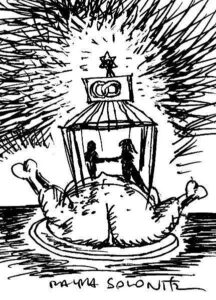 The mom called a fourth time and said the bride wanted a different band. I didn’t even ask who. I usually ask, but I was so mad — mostly at myself because I had forgotten the rule “it’s all about the bride.”
[Exception: A mom booked us for a Cleveland wedding, and the bride — from Seattle — ran up to the bandstand and said, “I hate klezmer music! How could my mother do this to me!”]
After Ms. Thanksgiving Turkey hung up, I called a second client — a bat mitzvah mom — who was late with her contract and deposit.
She said she wanted to talk more. I had already talked to her several times. I said, “Yiddishe Cup has been around over twenty years. You’ve seen us. Everybody has seen us. You know what we’re all about.”
She said her husband was sick.
Pause. Sick in the band biz means very ill. It sometimes means dying. I’ve played simchas (celebrations) for sick people; these affairs are the most poignant. I’ve seen dads roll down the aisle in wheelchairs. Dads who couldn’t talk because of strokes. Guys with half a brain left.
Yiddishe Cup has played for dead people; we played a bat mitzvah luncheon where the bat mitzvah girl’s mom died the day before. The funeral was the next day. We played in the family room instead of at the party center. Two or three people tried a hora.
The woman with the sick husband came to my house to further discuss the bat mitzvah. I asked what her husband’s illness was. She said he was depressed. Her husband — a doctor — had lost a patient that week.
He wasn’t sick! Doctors lose patients all the time! She just wanted to change the date, the number of musicians, and a few other things. Which she did.
The gig — on a new date, with fewer musicians — was surprisingly fun. Everybody was upbeat, and nobody bugged the band, except the good-natured grandfather, who said to our pianist, “Do you know your fly is down.”
Our pianist, not missing a beat, answered, “No, can you hum a few bars?”
Nobody was sick. That was something to be thankful for.
—-
Please see the post below too. It’s fresh.
—
Yiddishe Cup plays Columbus, Ohio, 6 p.m. Sun., Dec. 5. Chanukah. Please contact Tifereth Israel Congregation for details.
—
Illustration by Ralph Solonitz.
November 24, 2010 6 Comments
THE ESTHER ISENSTADT ORCHESTRAS
Bass player Esther Isenstadt ran classified ads in the back of the Cleveland Jewish News in the 1970s and 1980s: “Sophisticated music for discriminating people” . . . “Leave your records at home and bring LIFE to your party” . . . “From ‘The Hora’ to ‘Beat It.'”
Esther was gigging regularly when Yiddishe Cup started in 1988. I didn’t run into her. She was working the senior-adult circuit, while Yiddishe Cup was doing the glam jobs: bar mitzvahs and weddings. Esther was not a klezmer musician. She played mostly classical and pop — and some Jewish.
When I eventually met Esther, she was in The Weils assisted living facility. She was 86 (2003). She approached me after a Yiddishe Cup senior-adult program to say hello. I told her I knew of her. She smiled. I had one of her songbooks; I said I bought it used at the Cleveland Music School Settlement. She smiled again. Then she didn’t smile. She said, “I never thought I’d end up here!”
 Ed Preisler — another Weils resident — chimed in, “I came out here to die.” (Ed died six months later.) Ed was the 1946 Ohio Amateur Golf Champion.
Ted Bonda, the former owner of the Cleveland Indians, was also there. I switched gears; I asked Ted, Ed and Esther — and the other people schmoozing after the program — if they knew Mickey Katz. One resident knew Mickey from Yale Avenue, Cleveland; another, from Berkshire Road, Cleveland Heights.
I asked the group if they were familiar with the word kile (hernia). Nobody knew it. That was surprising. Kile is the punch line in Mickey Katz’s song “16 Tons [of Hard Salami]” . . . “The balebus (boss) promised me a real gedile (glory), instead of geldile I catched me a kile (hernia).” The Weils was apparently not heavy-duty Yiddishists.
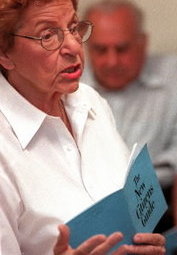
Esther Isenstadt teaching ESL, 2000
Esther Isendstadt had played in four suburban orchestras, raised a family, taught elementary school, led party bands and taught ESL in “retirement.” She was a Glenville High graduate, as were Bonda and Preisler. Glenville High was where Jewish overachievers went to high school in the 1930s. [John Adams High students — like my parents — would have disagreed with that. John Adams, in the Kinsman neighborhood, was more proste (working-class) than Glenville, but equally proud.]
I learned “Shir Lashalom” (A Song of Peace) from Esther’s book. That tune was a must-play in 1995 — the year Yitzhak Rabin was assassinated. The lyrics were in Rabin’s pocket when he got shot.
Esther had rubber-stamped Esther Isenstadt Orchestras on every other page of the used song book. A Jewish bandleader with a rubber stamp.
I got a rubber stamp.
Esther died last month at 93.
There weren’t many bands with names like the Esther Isenstadt Orchestra in the 1970s. There still aren’t.
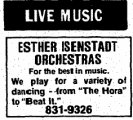
CJN 1984
—-
Illustration by Ralph Solonitz.
November 19, 2010 5 Comments
SHE STOLE MY SKIRT!
The tenant — a poet — said she liked the way the sunlight glinted through her living room blinds onto the hardwood floor.
“But what really got me,” she said, “was your company’s Craigslist ad about ‘a closet big enough to park a Mini Cooper in.'”
I liked her. She liked my copy writing. She thanked me for “two wonderful years.”

Another tenant — a waitress — interrupted the landlord-poet lovefest. The waitress, standing at the poet’s door, said another tenant — a third person — had just stolen the waitress’ skirt from the laundry room dryer and was wearing it.
“Wearing it in the building?” I said.
“Yes.”
The skirt was a full-length, tie-dyed orange, green and red hippie shmate. The skirt’s owner — the waitress — was 26.
The thief was a middle-aged black woman who wouldn’t answer her door. Not even when the cops showed up.
Meanwhile, I was also dealing with a drunk who had run her faucet all night, on purpose, and had called my manager a “pig.”
That woman got an eviction notice right then.
I decided to phone the black woman about the tie-dyed skirt. I got her boyfriend. Good. He was on the lease; she wasn’t. I told him the skirt thief had to be out in three days.
“Don’t put me out! She’ll go,” he said. He was a solid tenant, other than he left cigarette butts all over. He was 69 and “country” — from Tennessee. On his rent checks he wrote rant instead of rent in the memo line. (Another poet?)
“She can’t stay more than three days,” I said.
“Can I ask, sir, why is that?'”
“I rented to you, not her. The woman is not on the lease.”
I didn’t bring up the stolen skirt matter; that would have complicated things. But I wanted to say: “The next time your lady friend steals clothes from the laundry room, tell her not to wear the skirt in the building!” Out in three days.
My poet tenant enclosed a poem with her final rent payment. It began:
The way the forecast told of dark clouds,
drizzle, seemed more true than the way
the sun lit hills of trees, dull golds, rusts.
[by Karen Schubert]
I read that poem about 10 times. I concluded it was a “winter is a-comin in” poem. The drunks and skirt thieves were a comin’ in for the winter.
—-
Reminder: This blog is updated twice a week: Wednesday and Friday mornings. Please see the post below too. It’s kind of fresh.
November 17, 2010 No Comments
Y TU VIOLIN TAMBIÉN
From klezmer violinist Steven Greenman‘s “lawyer”:
Postscript: Galitzianers, please note, Greenman’s class begins Thursday (Nov. 18) in Santiago de Compostela, Spain.
***
Vid-loathers, here’s pretty much the same thing as the video, in text:
Klezmer violinist Steve Greenman asked my help in translating a Spanish contract. He thought he had a gig in Spain but wasn’t sure.
The contract wasn’t in Spanish. It was in Catalan, I guessed. Terceiro for tercero, for example.
We looked at an atlas. Verdict: Steve was going to Santiago de Compostela in northwest Spain, where he would teach master violin classes. The Spaniards probably had some local language up there. [Yes. Galician/Gallego.]
I said to Steve, “I saw a movie about a guy in a wheelchair filmed there. Can’t remember the name. It’s exotic. It’s nowheresville.” [The Sea Inside, 2007.]
Steven Greenman with Yiddishe Cup, 1992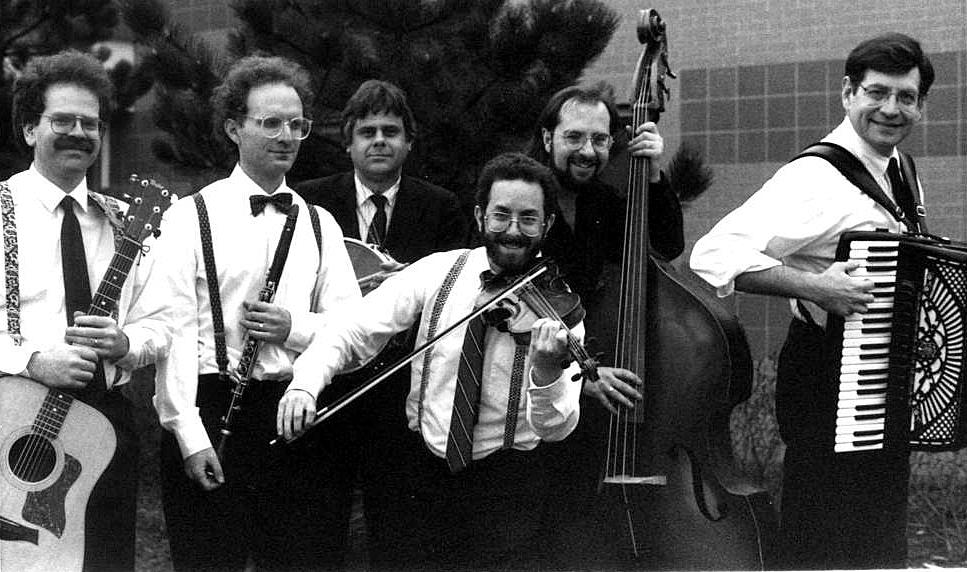
Just another day for Greenman, who expects to get gigs in faraway places. He thinks the world will come to him because he has never made a mistake on violin. A klezmer gig in northwest Spain . . .
I was glad to be a part of it, even if my role was just to say “I have no idea what this contract says.”
November 12, 2010 2 Comments
SHOULD I RENT TO A STRIPPER?
(THE MOVIE)
This is the most acclaimed animation yet from the guys over at Challah-Barbaric. This movie may appear like a navel-gazing indulgence, but it’s not. It’s magical.
Should I rent to a Stripper? is the lost collaboration between Fred Flintstone and Maimonides. It is a guide for the perplexed landlord and tenant.
The two main characters — a sleazy guy from Yiddishe Cup LLC and a bug-eyed naïf — turn the nasty, grim, cutthroat real estate world into something even grimmer — and very robotic.
The landlord is so pompous at first. Then he’s more so. But the young lady draws forth a bit of the landlord’s humanity and even a Chanukah song lyric.
After the movie, the couple goes for drinks and has an affair.
2:57 minutes. United States, 2010
—-
[The first paragraph in the capsule movie review (above) is lifted, in part, from John Ewing’s Cleveland Cinematheque calendar.]
—-
This blog is updated every Wednesday and Friday morning. Please check out the post below. It is recently hatched.
November 10, 2010 7 Comments
DOWN AND OUT IN TROY, MICHIGAN
I was down and out in a Marriott hotel in Troy, Mich. The bride, several hours earlier, had told me, “I can’t dance in these shoes. Can I just watch the hora?”
She watched. I asked her three times if she wanted to be lifted on the chair. No, she said three times. The bride and groom stood in the middle of the hora circle like statuettes on a wedding cake.
There was no place to walk at the Marriott, which was in a large shopping development.
Marriott Hotel, Troy, Mich.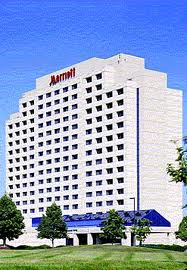
I wrote notes to myself on the hotel stationery to justify my existence. My truest observation: “Yiddishe Cup is providing a valuable service for the Jewish communities of the Midwest.”
The Marriott room had 8 pillows, 10 towels, 2 beds and 2 bathroom mirrors that showed everything.
I couldn’t justify 8 pillows, 10 towels, etc. I just couldn’t. That bride should have danced.
Luckily the hotel windows didn’t open.
—-
Yiddishe Cup plays this Sunday (Nov. 7, 4 p.m.) at the Brecksville United Church of Christ, Brecksville, Ohio. www.brecksvilleucc.org
—-
REMINDER: This blog now updates twice a week: Wednesday and Friday.
November 5, 2010 1 Comment
THE MIDWEST’S TOP 10 KLEZMER
. . . TOWNS
My nephew visits Big League baseball stadiums around the country as a hobby.
I visit Big League klezmer towns in the Midwest as a hobby. My remarks (below) are challah-to-challah comparisons. I’m not comparing Milwaukee to Paris.
The best Midwest klezmer towns:
1. Pittsburgh . . . Squirrel Hill, Shadyside. Everything you need. (Pittsburgh is not in the Midwest, but so what. It is west of the Alleghenies.)
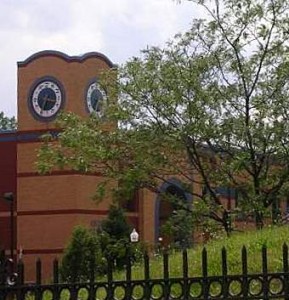
Hebrew clock. Pittsburgh JCC
2. Chicago. The Midwest klez capital. Maxwell Street Klezmer Band is the band in the Midwest. A Cleveland boy — a Northwestern student — worked in the Maxwell Street office; I had that kid wired. Yes, a klez band with office help. Chi is that big. Powerful klezmer forces prevail in Chi. Max Street does not allow Ohio bands within 80 miles of The Loop. Yiddishe Cup played Rockford, Ill., once.
3. Detroit. West Bloomfield, a Motown suburb, has Temple Israel, a very attractive modern temple. There is such a thing. At concerts, the Temple Israel ark is curtained off by a striking yarmulke mandala.
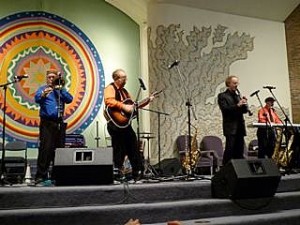
Yiddishe Cup at Temple Israel, 2010
4. Kansas City — as marvelously tough as Cleveland. KC’s Country Club Plaza is like Shaker Square but bigger and older.
5. St. Louis. Yiddishe Cup played there twice, then it all died out — the gigs. My Cleveland rabbi, who is from St. Louis, has a couple seats from the old Busch stadium. He should install the seats on our shul’s bima (altar) and invite Enos Slaughter to give the d’var torah (torah lesson/sermon). Good custard — Ted Drewes — in St. Louis. Similar to Cleveland’s East Coast Original Frozen Custard.
6. Milwaukee. Its claim to fame: songwriter Sigmund Snopek III, who wrote “Thank God This isn’t Cleveland.”
7. Minneapolis. There are a lot of klez bands up there: Prairie Heym Klezmorim, Klezmerica, etc. Too much klez in Minnie. Yiddishe Cup will never play there.
8. Cincinnati. The Plum Street Temple, where Stephen Wise officiated, is the most rakish and Moorish synagogue in the country. Check it out.

Plum Street Temple
9. Buffalo. Terrific art museum. Underrated.
10. Indianapolis. Overrated. A suburb of Atlanta.
Cleveland isn’t ranked. That wouldn’t be fair. But off the record, Cleveland is number one.
November 3, 2010 5 Comments
THE CHOCOLATE FLOWS LIKE A RIVER
At a candy-theme bar mitzvah, the dessert table is tortes and truffles, and the kids’ table is do-it-yourself ice cream sundaes and candy bars.
The bar mitzvah boy — the candy man– has a custom-printed candy bar named after him. The nutrition data reads: “Serving size — 1 young man. Ingredients — charm, wits, humor . . .”

Yiddishe Cup wants its own candy bar. It’ll be dark chocolate with slivers of old clarinet reeds. We’ll put these treats in the goodie bags for the bar mitzvah kids.
Any leftovers, we’ll take to Yiddishe Cup’s haunted house. This year our torture chamber features Don Friedman, our drummer, telling nonstop Internet musicians’ jokes like “What is the definition of an optimist? A trombonist with a beeper.”
Any leftover chocolates from the haunted house, we’ll give to our keyboard player, Alan Douglass, who is good for a candy bar and diet pop many mornings. Repeat at bedtime. I bought him a Snickers at a gas station and he refused it. It has to be MilkyWay or Three Musketeers.
***
The candy expert is Steve Almond, author of Candy Freak.
I, too, did some candy reporting, but I didn’t have the name for a career in it. In the 1980s I interviewed a chocolate factory owner who claimed dark chocolate was a Jewish thing. Maybe because of kashrut? [Jewish dietary laws]
Yes, a lot of Jews prefer dark chocolate. For one thing, it is a health food.
This year Yiddishe Cup is trick-or-treating as klezmer musicians. Yes, again. But with a twist: we’re ditching the Tevye vests and caps, and going as chocolate fountains with silver-foil Frank Gehry antlers dripping Hershey’s syrup onto our faces.
—-
1 of 2 posts for 10/27/10. Please see the post below too.
October 27, 2010 8 Comments
WHAT ANIMALS TO BRING TO A JOB INTERVIEW
Before I hire a building manager, I interview the candidate at his residence.
One man’s house had no front stoop, and he had four dogs in the living room. There was hardly any non-dog space in that house. We wound up in a bedroom on the third floor. There was a big bird up there.
How about a doormat that says “Got beer?”
I once hired a woman with that doormat and she worked out well. She was a steady worker and controlled her drinking.
Ethnic factory workers are usually solid too. Too bad they don’t exist anymore.
Ethnics or factories?
Both.
Benny Artino, a building manager, worked the day shift at Eaton Axle. His wife, Betty, was the world’s best cleaner. She wanted to be buried with a can of Comet. I gave Betty an unlimited cleaning budget. She liked to vacuum the halls every day. I didn’t try to stop her. Why would I?
When the Artinos’ son Paisan bought an apartment building in Tampa, he asked my advice, and I said: “Buy the biggest building you can afford. You might have one boiler and one roof for multi-suites, or you can have the same one boiler and one roof for a double house.”
One of my worst hires was a cocaine addict. She ran up my Home Depot account with charges for an air compressor and tool box. The gift certificate $50 was over the top. She fenced the items.
After I fired her, I went to Taco Bell to reconsider. My father had given an employee a second chance after she had ripped him off, and she had repaid my dad and stayed on the job.
But my custodian — the coke head — had told me, “I have a few shopliftings but I never stole from people.” Was I not people?
I stuck with fired. I didn’t say, “You’re fired.” I said, “If you turn in the keys this weekend, I’ll pay your moving expenses and give you four-hundred dollars, and I won’t call the cops.” Sometimes it pays to pay people to move.
***
My favorite manager, at least to listen to, was “Roy Hamilton,” circa 1978. (“Roy Hamilton” is a composite of several former building managers.*) . . .
Bert, little bitty buddy, I’ll tell you one thing I done: I had this old car, couldn’t get it to do nothing. I pushed and pulled and beat on it. Then I throwed it over a cliff by the Rapid ravine. I said, “Let’s throw over a car.” Me and my boys done it.
My old lady was against it. She was the biggest woman for churchgoing you ever seen. She thought she was better than me.
She was skinnier than a stick. Totally emancipated. And ornery. When she got money, that heifer, watch out. Man, I didn’t dig her.
She’s still here, on Madison, over a jukebox. She breaks 100 on a good night at Mahall’s [bowling alley]. She came at me with a mouth full of beer. Got all over the floor and balls.
She’s got claws. They all do. Bert, there’s a lot of good-looking heads out there just waiting to nail you to the cross.
She makes me sick. Ferocious of the liver. That’s a situation. Nobody comes between me and my beer, but that broad somehow does.
It’s all in the numbers. Course it is. I ain’t asking for much. This upcoming repression is going to be so bad it’ll shake your teeth loose. I just want to be reborn the poodle of a rich lady. That’s my next life.
Little bitty buddy, you got a number? Ain’t nothing but 1, 2, 3. Give me a number. What’s the new rent on apartment 34? $235? That’s my number. You just gave me a number!
—
* “Roy Hamilton” is mostly the real Roy Hamilton, a Tennessee-born building manager who was a painter at Midland Steel (Cleveland). He died in 1984. Note: I lifted several lines (in the first two paragraphs of this “Roy Hamilton” saga ) from Arkansas writer Charles Portis, to get in gear.
—
1 of 2 posts for 10/20/10. Please see the post below too (which was technically put up yesterday).
October 20, 2010 1 Comment
