
Category — Kinder, Di
PIPSQUEAKS
Most of the art in my house is by Irwin Weinberger, Yiddishe Cup’s former singer. Irwin is a good painter as well as a good musician.
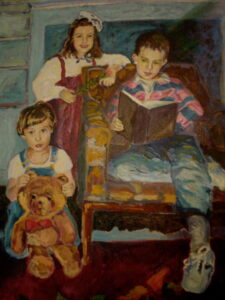 Irwin did a portrait of my kids 35 years ago. I thought my kids — pipsqueaks — were cute. But then the pipsqueak-dom dragged on for years, and I would stare at the painting and say, “Grow up already!”
Schlepping kids crosstown to gymnastics meets was not fun. Schlepping my youngest to an 8 a.m. hockey game in Parma Heights was not fun. Sitting through my daughter’s swim meets was not entirely pleasant. (The diving part was fine, but the swimming races — which she had nothing to do with — weren’t fun.)
Granted, the kids did play without supervision, too. Free range, as it’s now called. My oldest used to ride the crosstown Lee Road bus just for fun. And he would ride the Rapid out to the airport. I got in trouble for that. The fuzz at the airport called me once and said I had to go out to the airport and pick him up.
I’m looking at Irwin’s portrait. Reminds me of my grandkids. Raising my own kids is a blur.
September 23, 2026 2 Comments
TIME FOR PUTT-PUTT
Whatever happened to Putt-Putt? There are only 29 Putt-Putt courses left in the United State.
My son Teddy had a childhood birthday party at the Northfield Road Putt-Putt in 1990. He got a trophy and a cake. The birthday boy got a trophy, no matter what.
At Putt-Putt, you can make a hole-in-one on every hole if you are good and lucky. All the holes are par 2. Teddy — in his adulthood — had a friend who was a Putt-Putt pro.
There used to be a Chinese mini-golf course on Libby Road at Broadway Avenue in Cleveland, with a Buddha that went up and down. That was the epitome of exotic outings to my high school gang.
My grandkids are now two and four years old. Time for me to revive my mini-golf outings? I just need to stay healthy so I can bend down and pick up the ball. That’s the hardest part of mini-golf.
I always liked the windmills and streams, like at Pirate’s Cove. The man who started Putt-Putt called those features “gimmicks.” He was Don Clayton of Fayetteville, North Carolina. I’m not him.

—
Yiddishe Cup plays a free concert 7 pm Sunday, June 28, at the Alma Theater, Cain Park, Cleveland Heights, Ohio.
June 10, 2026 2 Comments
SEARCHING FOR GALICIA
One of my grandmother’s choice Yiddish expressions was “Geven-zhe nit a yold.” (Don’t you be a chump.) My grandmother — Toby’s mother — owned a candy store, raised four kids almost single-handedly, buried a three-year-old daughter, and during her retirement years, owned a four-suite apartment building. She was nobody’s chump.
Anna Soltzberg (née Seiger) occasionally called her grandchildren — like me — foyl (lazy). She lived at our house for a while. I called her Bub — short for bubbe (grandmother). Bub was not into baseball; she was into the card game casino, the television show Queen for a Day; borscht and boiled chicken. She could eat. She had sugar diabetes. She wore bubbe shoes.
I couldn’t figure out where Bub was from. She was from Galicia, she said. Spain? Galicia was also a province in Austria-Hungary. Bub was from a shtetl called Grodzisk. She came to America at 20.
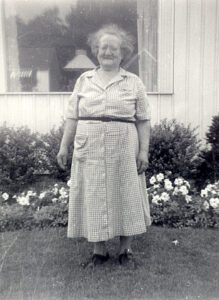
Anna Seiger Soltzberg (1884-1964). 1598 Laclede Rd., South Euclid, Ohio
In junior high I told my friends my grandmother was from Austria. Not exactly Vienna, to be sure. But “Austria” made sense to my friends.
Bub complained about the level of kashrut at my aunt’s house. Bub wanted my aunt not to keep kosher. Keeping kosher was too expensive. Bub was an apikoros (non-believer), socialist and cheap.
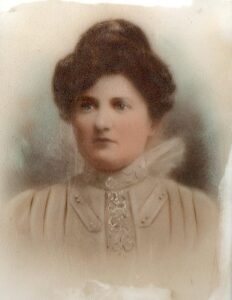
Bub around 1904, New York City.
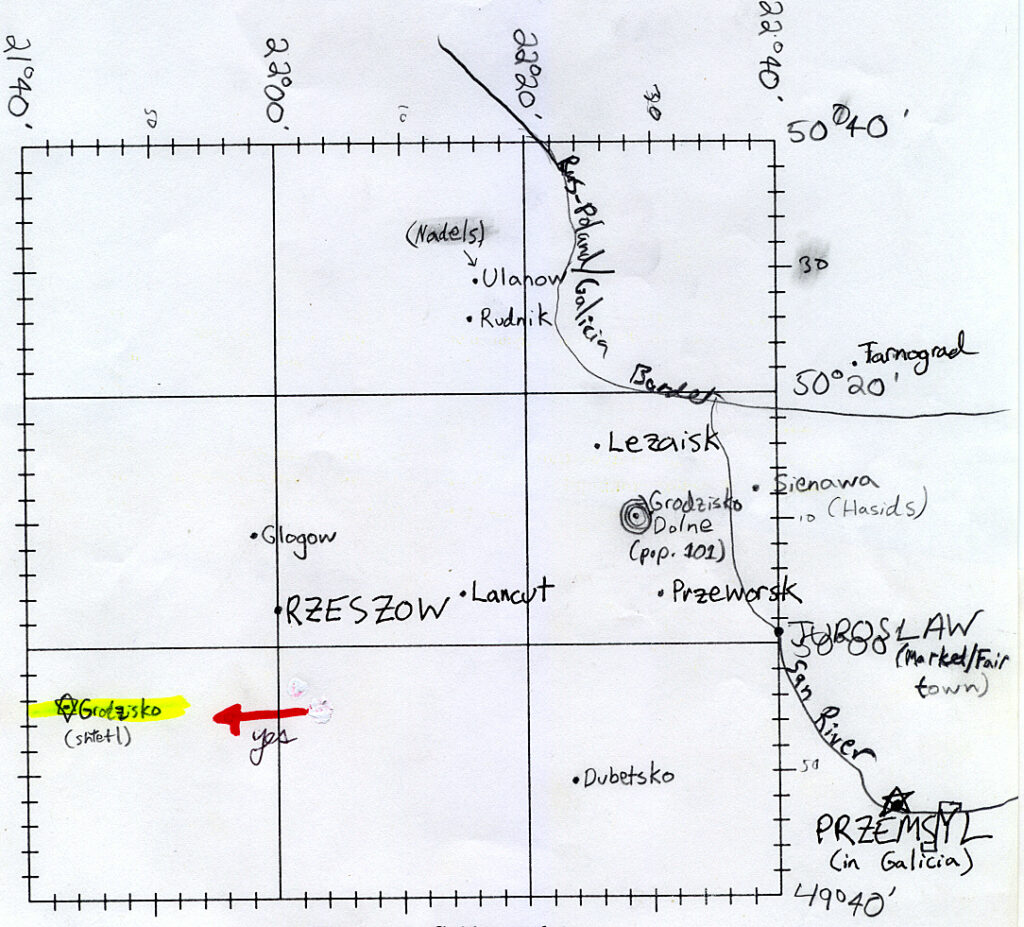
. . . Grodzisko, Galicia, Austria-Hungary. (The Yiddish name for the shtetl was Grodzisk, GRUD-zhisk) In the 1980s I located the shtetl on the Shtetl Finder map.
Grodzisk was about 60 miles west of Przemysl. The various shtetls had so many different names (Polish, Ukrainian, German, Yiddish). That was the tricky part.
I had a family postcard, postmarked “May 1, 1939, Grodzisko.” It was in Polish and said, “How are you?” On the flip side was a photo of a relative, Mili Seiger. The Germans invaded Poland four months after the postcard was mailed.
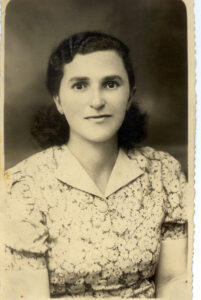
Mili Seiger, 1939, Grodzisko
I looked up “Mili Seiger” on the Yad Vashem online archives. There were so many Seigers, Siegers, Zygers, Zaygers and Zeigers, I couldn’t find Mili.
There are three types of Jews. Not Reform, Conservative and Orthodox. Try American, Israeli and victims of the Holocaust. Each about a third. These are my people.
—-
Plotting Grodzisko [Grodzisk] by Teddy Stratton, 1998:
January 6, 2026 3 Comments
A SWING AND A MISS
Last month I ran into a tenant carrying an electric bass in a case. Or so I thought. Turns out he had a Stratocaster guitar. “I’m storing it for a guy,” he said.
“What do you play?” I said.
“I’m the vocalist.”
“What’s the band?”
“Home and Garden.”
[Later googled: Home and Garden is an avant-garde, post-punk band featuring some former Pere Ubu players. And by the way, the singer pays his rent on time.]
“My son is in a well-known band — Vulfpeck,” I said.
“What?”
“Vulf . . . Peck.”
“Never heard of it.”
“Well, I guess they’re not that well-known.”
—
I had been trick-or-treating with my grandkids in Chicago several days prior. I played clarinet while making the candy rounds. Two young dads requested a jazz tune, so I played “When the Saints Go Marching In.” I can get away with Dixieland because I’m old. The dads seemed OK with it. I asked if they played music. Yes, drums and bass. I didn’t ask them if they had heard of Vulfpeck. The trick-or-treating and my grandkids — the main attraction — threw me off my kvell game.
I bet they knew Vulfpeck!

The Strattons in Ann Arbor, 2010. Random old photo.
—
This reminds me of a Cleveland Jewish News article (3/31/2000) about the father of Steely Dan’s Donald Fagen:
“Would you, by chance, be a Steely Dan fan?” Beachwood resident Joseph ‘Jerry’ Fagen inquires wryly. It’s an unlikely question coming from an 80-year-old, but Fagen’s favorite conversation starter affords the opening he needs to do what any parent would do in his shoes: kvell a little.
“Reaching for his wallet, the spry sneaker-clad Fagen produces a computerized list in tiny type of the 13 albums released by his son, Donald Fagen, co-founder of the jazz-rock-pop recording group Steely Dan. His latest entry? Two Against Nature, the group’s newest release, which debuted last month at #6 on the Billboard charts.”
Full CJN article by Susan Rzepka here.
November 12, 2025 2 Comments
JEOPARDY REDUX
Ted Stratton was on Jeopardy 20 years ago. On January 21, 2005, to be exact. That afternoon I went to Hillcrest cemetery to tell my parents about the impending evening show. Snow covered all the flat-level headstones at Hillcrest. I found “Siegal” but not “Stratton.” However, I think I made successful contact with my parents.
But how about connecting with the president of the United States? What if George W. Bush declares war on some country today and the Jeopardy show doesn’t air tonight?
I emailed everybody about the show. I played tennis. But I couldn’t concentrate on no tennis game!
I knew, in advance, the outcome of Ted’s Jeopardy game; I had been to California for the taping three months before. But I wasn’t allowed to tell anybody the result. The day of the airing (and cemetery visit), a friend said, “Bert, you wouldn’t be throwing a party tonight if Teddy hadn’t won.” Maybe. I didn’t answer her. I planned to host a viewing get-together. I worried some more about W. and war.
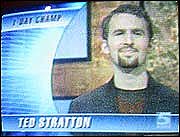
Ted faced a Boston book editor and “a graduate student originally from Johnson City, Tennessee,” which is Jeopardy-talk for “This guy from Tennessee is now living in Cambridge, Massachusetts, running a lab at MIT.”
Ted was formidable, don’t ever forget that. For instance, he cleaned up in the category of “Our Lady,” about Catholic shrines, like Our Lady of Czestochowa (Poland) and Our Lady of Gethsemani (Kentucky). Ted — a recent Brandeis graduate — knew his Catholic shrines.
(There’s a play-by-play of all recent Jeopardy games on J! Archive, a site run by Robert Knecht Schmidt, a Clevelander and former Jeopardy contestant.)
Going into Final Jeopardy, Ted was in second place, the Boston editor and defending champ was in third, and the Tennessee grad student was in first. The Final Jeopardy category was “Fictional Children.” The question was “This boy, introduced in a 1902 book, flew away from his mother when he was 7 years old.”
Merv Griffin made a fortune on the Jeopardy think music, which he wrote. And he owned the show, too, which he sold to Sony.
I felt like I was watching my kid line up a 50-yard field goal at the Ohio State-Michigan game with a second left on the clock. I was helpless to affect the result. That’s the craziest part about being a parent — all the collateral, out-of-your-control joy and pain. (And it never ends until you end.)
The Boston editor answered, “Peter Pan.”
Correct. She went up to $10,900.
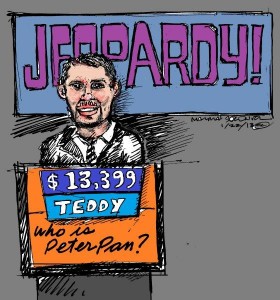
Ted said, “Peter Pan.” He went up to $13,399.
The Tennessee student said, “The Little Prince.” He went down to $7,900.
Alex Trebek announced: “The new champion, Ted Stratton, a reporter from Cleveland Heights, Ohio.”
January 29, 2025 3 Comments
THE BEST FAMILY TRIP
OF ALL TIME
Teddy, then 11, insisted we go to Disney World. He wasn’t abiding his mother’s posturing about how Disney World would deliver no “sense of mastery” to him. Let’s go!
This would be Ted’s second Disney trip. He had been to Orlando five years previously with his grandmother, sister and me.
The repeat trip turned out to be the greatest family trip of all time. Ted and his siblings, Lucy and Jack, went absolutely nuts for Figment, Miss Piggy and the Ninja Turtles. And Epcot was cool. The kids spent some time on the floor there — Lucy on top of Jack in the Moroccan restaurant lobby, putting him in a full-nelson.
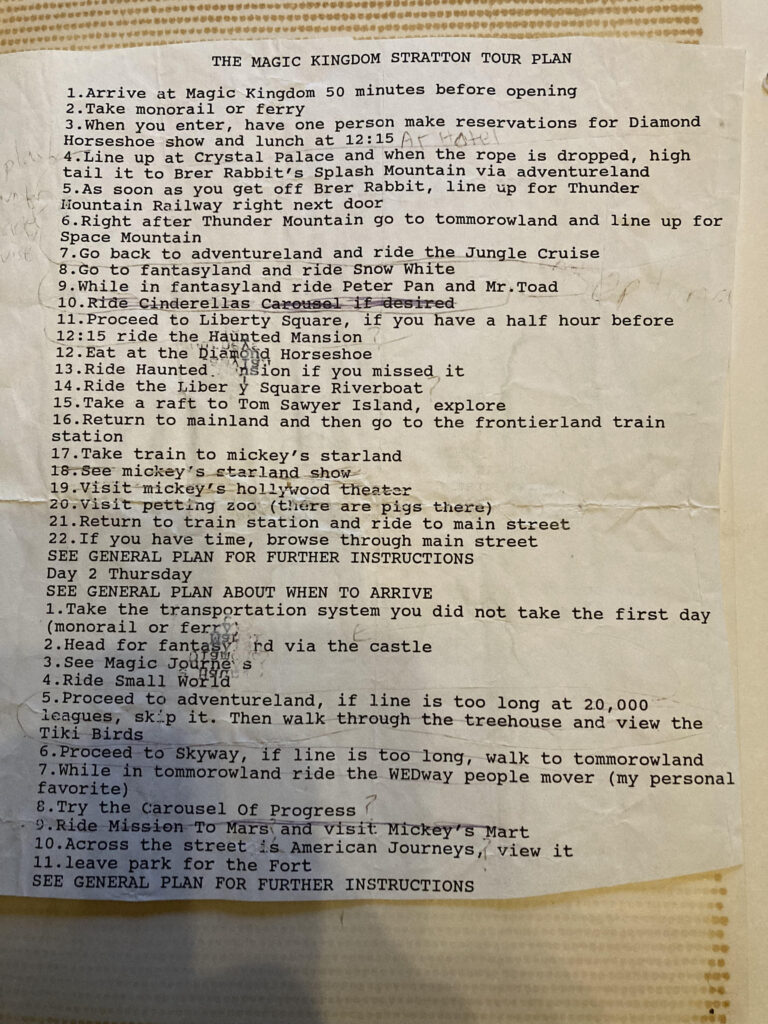
Ted had researched the vacation, using Unofficial Guide to Disney World. (This was 1993, pre-Web.) Teddy devised our personalized Disney itinerary. We got on popular rides at odd hours and walked in counter-intuitive directions. This was before priority passes and VIP lines. This was when America was Sweden.
Prior to the Disney trips, I had been a snob about amusement parks. If an amusement park was new-ish, we weren’t going. It had to be old and rickety. We had gone to Memphis (Avenue) Kiddie Park, Geneva on the Lake, Kennywood in Pittsburgh, and Conneaut Lake Park in Pennsylvania. Conneaut was the best; it had a carnie booth of caged chickens playing tic-tac-toe. You bought corn kernels from a gumball machine and fed the kernels to the chickens, to motivate them to play tic-tac-toe. The contraption was like out of a B.F. Skinner behavioral-science experiment.
Conneaut closed in 2010. Luna Park closed in 1929. (I didn’t make it to that one.) Euclid Beach Park — the classic Cleveland amusement park — closed in 1969. Geauga Lake, for some reason that was never on my radar.
Disney forever.
—
Teddy’s itinerary . . . This is just the first page (the next two pages are lost to history). 1993. Typed on a Compaq x386. WordPerfect 3.1.
January 8, 2025 6 Comments
MILLIONS OF CATHOLICS
AND SOME JEWS
When my kids were young, every Chanukah I would take them to the various Jewish bookstores around town to buy decorations and Chanukah books and toys, just so they would get used to these places. At Frank’s Hebrew Bookstore, I thought I was in Poland: tallisim (prayer shawls), spice boxes, yarmulkes. A photo of Koufax on the wall — that would have helped.
Also, I drove my kids to the Christmas lights at General Electric’s Nela Park. That was a family tradition, started by my parents in the 1950s. Why not? Lights is lights.
Yiddishe Cup used to play holiday parties at the Cleveland Plain Dealer. We would stroll table to table. Just about everybody asked for Christmas carols.
Hey, I didn’t start Yiddishe Cup to play “Silent Night.” I said no to all Christmas requests. We would play “Hava Nagila” or tunes from Fiddler on the Roof, if asked. Dick Feagler, a renowned Plain Dealer columnist, gave us the thumbs-up for staying Jewish. Dick apparently liked our Full Cleveland approach. (Full Cleveland meant polka, klez, bandura, tamburitza, salsa. All good.) No rock for Dick.
After strolling to about 10 tables, I cracked; I couldn’t take any more “What? You don’t do Christmas songs?” We played Jose Feliciano’s “Feliz Navidad.” Christmas in Spanish was OK.
—
My family went to KlezKamp in the Catskills during Christmas week for more than a decade. At first I couldn’t get my wife, Alice, to go. We had young kids and she didn’t want to schlep them. One year I took the two oldest kids and went without her. I spent a lot of time in the hotel game room and swimming pool that year. That chemical vat, a k a pool, was only slightly larger than a half dollar, and you had to coat yourself with 100-proof skin cream or get a rash.
The kids and I went to New York City afterward. My daughter, Lucy, then 5, made me carry her everywhere. We didn’t get too far. We went to Popeye’s on Times Square for dinner.
When we got back to Cleveland, Alice said at the doorway, “The kids look anemic!”
Alice, we had beans and rice and lemonade at Popeye’s! (The kids hadn’t been too crazy about the borscht and herring at KlezKamp.)
Alice has never trusted me with food, or childrearing for that matter.
The following year Alice came with us to Klezkamp. All five of us. Alice was a folk dancer and exercise nut; however, Jews at klezmer conventions are not typically exercise freaks. Alice found a nearby indoor tennis court which was so dusty the balls turned black after one set. It was like playing in a parking garage. We went skiing on Christmas. I thought the slopes would be empty, but no, a lot of Asians and Jews from New York City were there.
We snuck over to The Pines resort for ice skating. That place looked like a staging area for a Borscht Belt revival movie. We had a good time checking out trivia contests in the lobby. I’ve got nothing against middle-class Jews. I am one.
My family kept going back to KlezKamp every Christmas. Ikh khulem fun a vaysn nitl. (I’m dreaming of a white Christmas.) And every year Alice would complain: “I can’t believe we’re going to KlezKamp again!”

Jack Stratton, Merlin Shepherd (kneeling) and Lucy Stratton. KlezKamp 1993.
Finally, after 12 years, the brainwashing was complete; the kids knew more Yiddish than oy vey and farklempt, and they knew a lot about klezmer music, and Alice could have, by then, taught the dance classes. And I had met all the old klez guys: Max Epstein, Felix Fibich, Danny Rubenstein, Velvel Pasternak. Paul Pincus, Leon Schwartz, Ray Musiker, Ben Bazyler, Sid Beckerman, German Goldenshteyn, Howie Leess, Elaine Hoffman Watts.
They’re probably all dead now.
I paid my dues.
—
“Merry Christmas” is OK with me. Beats “Happy Holidays.” I once went to a West Side house for Christmas and about 12 Ukrainian girls walked in and caroled us. And they were in full regalia. That was my most Christmas-y experience – until this year.
I went to Mass yesterday. Midnight Mass (which was actually at 4 pm for AKs like me and families with young kids). Joint was jumping. St. Ann Church, Cleveland Heights. A field trip. Park Synagogue’s senior rabbi, Joshua Skoff, led the outing.
The priest prayed for the well-being of the pope, Cleveland’s bishop, etcetera, on down to the “millions of Catholics” throughout the world. Millions — that word hit me. We Jews don’t bandy millions around lightly. That’s some big tent those Catholics have.
I miss KlezKamp. I like the small-ball game of Judaism. Only 15.8 million of us, and we all know each other!
December 25, 2024 3 Comments
MY SON THE TRAVEL CONCIERGE
My son Ted specializes in extracting parents and relatives from travel crises. He never gets lost. He always knows where he is. Ted has been like that since he was age 9, when he rode the Lee Road bus for the fun of it.
Ted, Alice, and I recently got delayed at LaGuardia Airport. Delayed big-time. Our flight was canceled. It was canceled just as I pointed out to Alice, “This weekend has been seamless.” We had traveled to a family wedding a couple hours north of NYC. When our LaGuardia flight was canceled, Ted immediately got on Priceline and booked us a hotel at a nearby dump in Queens. But a nice dump.
New York’s outer boroughs — I like them, in theory. But when I go to NYC, I rarely leave Manhattan. How often do I ride the bus in Queens? Just this once. With Ted’s assistance, we caught a city bus outside our hotel and went to Flushing and wound up at a noodle house. I hocked the Chinese-American guy next to me in the restaurant. He said Chinatown in Manhattan is bigger than the Chinatown in Flushing. But Flushing’s Chinatown felt bigger to me. Flushing was like a total-immersion Asian experience. (Manhattan’s Chinatown is more like a neighborhood touristy thing, next to another colorful neighborhood, Little Italy.)

Ted [pink shirt], England, 2016 bike tour.
Koffi, an African clerk at the Delta Airlines counter, said to me, “Your son is in charge now. He has a good demeanor.”
Right. Glad.
June 26, 2024 1 Comment
RINGING HOME
I’m related to very few Strattons. So I got excited when I came across Jon Stratton, the author of Coming Out Jewish. I found him on the internet. Wow, another Stratton writing about Jewish matters. Maybe I’m Jon, using a pseudonym.
Jon Stratton is a cultural studies professor in Perth, Australia. His mother was Jewish and his father Christian. Jon grew up in England, not knowing anything about Judaism or Yiddishkayt (Jewishness).
I ordered Jon’s book on Amazon. I found out Jon “came out Jewish” in multicultural academic circles, writing about, among other things, “ghetto-thinking” — Jewish anxiety. He said he had been slightly different from his friends in England because his mother had made him “ring home” whenever he went out, while his chums never had to ring home. Jon’s mother was an angst-ridden Jew from the Continent.
My mother, on the other hand, was from the Mississippi Delta and didn’t worry about anything. My mother left me off at freeway exits to hitchhike. One trip I made a left on I-80 and wound up in South America. She was OK with that.
In 1990, at the Cleveland airport, I waited for my mom to arrive on the “snowbird” flight from Florida. I was with my then 9-year-old son, Teddy, who I let run around the airport. But I warned him, “If you wander off too far, you’re going home on the Rapid.”
He wandered off and I left him. A half hour later a Cleveland policeman called me, and I had to go back to the airport — 20 miles one-way. The airport cop gave me a “sir, you are a douche bag” smirk when I entered the airport police office. The cop didn’t understand my son had practically memorized the Rapid Transit timetable and had ridden the complete Lee Road route.
I learned laissez-faire childrearing from my mother. There was nothing continental about her except her airlines. (Cleveland to West Palm Beach direct on Continental.)
If I ever go to Australia, I’ll look up Jon Stratton and maybe we can talk about our mothers.
October 12, 2022 1 Comment
BIRTH PAINS
My daughter, Lucy, calls. She’s six months pregnant. This is January 2022. She says, “I don’t want to dump on you.” Then she does. She says the most recent ultrasound shows a spot on the baby’s heart. Lucy is on vacation in Mexico, and the midwife knew Lucy was on vacation, but the midwife nevertheless emailed Lucy, informing her to come in for her next ultrasound in six weeks instead of eight. That email dampened Lucy’s vacation mood. My mood (non-vacation) dampened, too. Lucy is in her late 30s. The docs are monitoring the heck out of her.
Me . . . I had insane back pain in 2017 and got an MRI. The result: a herniated disc at L1-L2. OK, but then the doctor called me a day later and said I might have syringomyelia. What? That’s a cyst on your spinal cord that can mess with your nerves and brain. I scheduled a second MRI right away.
My insurance company called the morning of the second MRI and said the procedure would be $3900, and they weren’t sure they’d pay for it because I had just had an MRI. I said “full speed ahead.” If my brain was frying, I wanted to know now.
The second MRI came back “artifactual” — no sign of a brain problem. False positive. That’s my story, and I told Lucy. So many tests.
But I guess more tests are better than no tests.
[Cecil was born April 18. Doing well. He has a spot in my heart.]
—
I had a humorous op-ed in the Wall Street Journal yesterday about fasting on Yom Kippur. (No paywall.)
October 6, 2022 3 Comments
SHOES — MY DAD’S
My father, Toby, had about 15 pairs of shoes when he died. I didn’t take any of his shoes, even though he and I wore the same size. He had a foot fungus, and my mother told me to pass.
My dad had wingtips, golf shoes and tennis shoes. I never saw him in sandals, work boots or hiking boots. White shoes, definitely.
I’m more sensible about shoes — a habit I picked up from my mom. I like SAS shoes, which my mother told me about. She needed solid shoes when she got Parkinson’s disease. “SAS” stands for San Antonio Shoes. But I’m too lazy to go to the specialty shoestore to replenish. So lately I’m rocking Rockports.
When my then-20-year-old daughter studied abroad in Barcelona, she said I couldn’t visit her if I wore tennis shoes or a fanny pack. My SAS shoes were an excellent substitute for tennis shoes in Europe. I never did figure out a good way around the “no fanny pack” rule.
My dad wore Purcells abroad. He didn’t let his children tell him what to wear.
August 4, 2021 4 Comments
SMALL TOUGH JEWS
The small tough Jews at my high school were wrestlers, except for Reed Klein the gymnast. The school had no gymnastics team. Reed was a one-man team. He went on to the Ohio State gymnastics team. The other small tough Jews were Harry Kramer and Steve Gold. They wrestled in low weight classes, like 93 pounds and 103 pounds.
My wife dated a wrestler in high school. My younger son wrestled in middle school. Jack was small and, at most, semi-tough. The matches were primal — two or three minutes of animal behavior in a stinky windowless wrestling room. The matches were scary and scarring. And I was just watching.
I never wrestled, except in gym. I didn’t like singlets or other guys’ armpits. I didn’t like headlocks either, unless Bobo Brazil was giving one to Lord Layton and it was 1960.
June 10, 2020 6 Comments
KVELLIN’ IN THE YEARS
Joseph Fagen — the father of Steely Dan’s Donald Fagen — used to approach strangers and say, “Would you, by chance, be a Steely Dan fan?” I do that, too, except I ask about Vulfpeck. I query Uber drivers and baristas if they’ve heard of Vulfpeck. Every time I do that, I have to spell out Vulfpeck. I wish Vulfpeck was Hello There. Every fifth barista has heard of Vulfpeck. Uber, longer odds.
At Vulfpeck’s recent Madison Square Garden concert, I spoke Spanish with a Puerto Rican guard at the artists’ entrance and got in through the back door of the Garden. The first performer I ran into back stage was Dave Koz, the smooth-jazz saxophonist. He gave me a “mazel tov.” He said “mazel tov.” Koz told me he remembered how meaningful it was when his parents came to his first mega gig and “they’re dead now.” Right. Show up.
I was backstage looking for backstage passes — about 50 passes. I had relatives coming from all over the country for the show. I was throwing a bar mitzvah party with a really good band.
Here’s the Fagen quote from the Cleveland Jewish News (Feb. 28, 2001). [“Bringing up Steely Dan” by Susan Rezpka]:
“Would you, by chance, be a Steely Dan fan?” Beachwood resident Joseph “Jerry” Fagen inquires wryly. It’s an unlikely question coming from an 80-year-old, but Fagen’s ‘favorite conversation starter’ affords the opening he needs to do what any parent would do in his shoes: kvell a little.
Vulfpeck. That’s V, U, L, F . . .
————
Madison Square Garden video:
https://www.youtube.com/watch?v=rv4wf7bzfFE
March 25, 2020 2 Comments
YOU ARE A COMPLETE FAILURE
What happened to Sylvia Rimm? She used to be on public radio, dispensing childrearing advice. Rimm told my wife and me to subsume our individual personalities and create a united front to raise our kids. We didn’t. My wife, Alice, quoted Sylvia Rimm endlessly. Alice also quoted Eleanor Weisberger, Spock, Braselton and every other childrearing guru.
Alice wanted our kids to acquire a “sense of mastery” — of everything. Like going to Disney World was garbage, according to Alice, because our kids wouldn’t learn anything there. Actually, the kids learned a lot there. Teddy single-handedly planned the whole Disney World itinerary.
Our kids had so many lessons. I mean, ping pong lessons, tumbling lessons, Hebrew lessons, accordion lessons . . . Capoeira. What’s that?
My wife now gives lessons in everything.
Our youngest kid, Jack, learned to juggle by age 10. Our daughter, Lucy, became a Division 3 college athlete in diving. We didn’t allow much TV, except Mr. Rogers and once in a while The Simpsons. When our kids grew up, they immediately got TVs and watched every show made in the past 40 years.
I liked Bettelheim’s A Good Enough Parent. I liked the title. I swore at my kids. Was that so horrible? Probably hit my kids. Blocking it. One of my teenage kids took my car to an SAT test, and I needed the car for a gig because my music gear was in the trunk. I went to the SAT site and swore at the kid. An adult said to me, “Hey, ease up.” My outburst cost my child at least 30 points.
I snitched on some delinquent neighborhood kids who were very loud and rowdy. I called the police. The cop said, “Hey buddy, you’ve got a pretty short fuse.”
Are you perfect? Are you “slightly imperfect,” like my underwear? Are you good enough? Or are you a complete failure?
February 12, 2020 1 Comment
JEOPARDY! AND MATH
I like the woman who beat James Holzhauer on Jeopardy! Monday night. I think she’ll go far. (If she lost last night, please ignore this paragrah.)
When my kid Ted — he was 23 at the time — won on Jeopardy!, our family had to keep his wins a secret for a few months. If the news got out, Ted wouldn’t get the money, for one thing. Jeopardy! tapes its shows a couple months in advance. How does Jeopardy! keep the taping results a secret? [Maybe Robert Knecht Schmidt will read this “Klezmer Guy” post and tell us. He’s a former J! contestant and expert.]
Relevant to this — today’s date, June 5. For Ted’s second game, the Final Jeopardy category was Middle Eastern Affairs, and the “answer” was “The Arab-Israeli War that started on June 5, 1967, ended with a cease-fire on this date in Israel.”
Ted knew about the Six-Day War, and so did the two goys who rounded out the panel. I — watching at home — did some easy math; I added 6 to June 5 and got the answer: June 11.
Wrong, Pops. It’s June 10. (Use your fingers to figure out the right answer, and while you’re at it, check out the math concept “fencepost error” on Wikipedia)
Ted answered correctly, and the others got it wrong. I have never been more flabbergasted.
June 5, 2019 No Comments
JEOPARDY!
At a Detroit wedding, the bride came down the aisle to a Barbra Streisand record. She paused several times to read from her childhood diaries. She had 109 journals. Luckily she only paused five times. Eight years later, she emailed me and asked if I remembered her. Yes, I did, and I remembered her bridal dance, too. Also, Billy Wisse was a groomsman at that wedding. I pronounced it Billy Weiss. I explained to him, “There’s a Ruth Wisse, a Yiddishist and professor at Harvard, and I’ve heard her name pronounced that way.”
“That’s my mother,” Billy said.
So I asked Billy if he was a professor as well. He said he wrote questions for Jeopardy. I said, “That’s a job?” And I jotted down his email address, because my son Teddy — a college student then — would love a job at Jeopardy on graduation. Teddy was on Brandeis’ Quiz Bowl team.
Two years later, Brandeis’ Quiz Bowl team played a national championship game in Los Angeles, and Ted and his Brandeis teammates met Billy Wisse for breakfast at Canter’s Deli.
Two more years ago by. We’re at 2004: Ted gets a call from Sony, which owns Jeopardy, offering Ted a slot on Jeopardy. A paragraph in the contract reads something like “Do you know anybody from Sony or Jeopardy? If so, you cannot be on the show.” Teddy did not know anybody on Jeopardy! Teddy and Billy Wisse ate breakfast once, two years ago.
Alex Trebek, the Jeopardy host, wore a cast on his wrist the day I went to the show. I sat in the peanut gallery. Trebek told the studio audience he had fallen off a ladder cleaning his gutters. Billy Wisse stood by a computer at the edge of the Jeopardy set. This was at Sony Studios in Culver City, a suburb of Los Angeles. I was nervous Billy Wisse was going to disqualify Teddy, but Billy didn’t make a move.
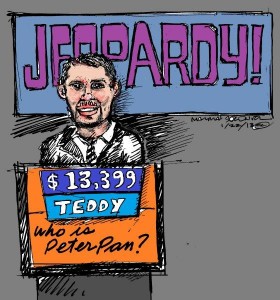 Ted aced the category “Our Lady,” about Catholic shrines. He knew Our Lady of Czestochowa (Poland), Our Lady of Gethsemane (Kentucky) and several others. The Final Jeopardy category was Fictional Children. The answer was “This boy, introduced in a 1902 book, flew away from his mother when he was 7 days old.”
An editor from Boston answered, “Who is Peter Pan?” Right! She went up to $10,900.
Teddy said, “Who is Peter Pan?” He went up to $13,399.
The returning champ, a scientist from Tennessee, said, “Who is the Little Prince?” He went down to $7,900.
Alex Trebek said, “The new champion, Ted Stratton, a reporter from Cleveland Heights, Ohio.”
Look it up.
December 5, 2018 3 Comments
CALIFORNIA
Around the time my younger son left for California — about seven years ago — I ran into a 24-year-old San Francisco girl at a shiva in Cleveland and told her to meet up with my son in Cali and show him around. I said, “Find him a job, a house, and marry him. I hope I’m not laying too big a trip on you.”
I was. She avoided me the rest of the shiva.
My daughter (who moved to Chicago about 10 years ago) once told me: “The kids who go out to California never come back.” My son in Cali said he feels guilty about leaving Cleveland, but not that guilty. He is 47-percent homeboy. I — by comparison — am 99.9-percent homeboy. I went to California four times in my twenties and ate a lot of KFC chicken on Shattuck Avenue in Berkeley and saw many loose screws on Sproul Plaza, such as a woman who wore a vinyl yellow-and-black Carnaby Street cap all the time. I hitchhiked up to Bolinas and Santa Rosa, and ate a large snail at a marine biology lab in Bodega Bay. My dad told me to move to California. Maybe that’s why I didn’t.
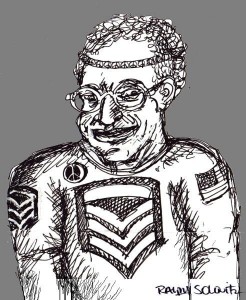
Time Traveler
November 28, 2018 3 Comments
HALIBUT WAS CHEAP THEN
For Clevelanders only, don’t forget to click the City Journal link at the end of this post.
When my mother died, we stored her furniture in the basement of one of my apartment buildings on the West Side. The furniture sat there for five years until my older son, Teddy, took the stuff and went off to law school. The furniture was mildewed but usable.
When I visited Teddy at law school and saw my mom’s furniture again, I had full-color flashbacks. Seeing that yellow kitchen table in play again was mildly disturbing. I had eaten at that table for my first 18 years, and now it was in student-housing in Toledo. It was Formica. It was worth something.
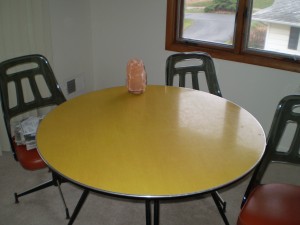
In high school I was laconic at that table. I didn’t talk. My dad didn’t talk much either. My whole family didn’t talk much. We didn’t watch TV at dinner, either. We ate a lot of fish. Halibut was cheap then.
—
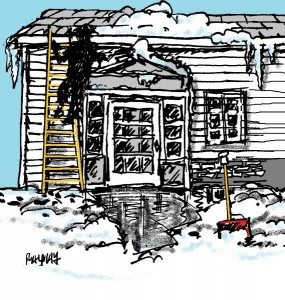
Here’s one I wrote for City Journal about snow. Just came out. “Gettin’ My Snow Belt On.”
March 21, 2018 2 Comments
JEOPARDY!
At a Detroit wedding, the bride came down the aisle to Barbra Streisand recordings. She paused several times to read from her childhood diaries. She had 109 journals. She didn’t read from them all. Eight years later, the bride emailed me and asked if I remembered her. Yes, and I remembered the bridal dance, too, and how we were followed by a soul band, and how I announced the bridal party participants by name. One groomsman was Billy Wisse.
I pronounced it correctly, like Billy Weiss. I said to him, “There’s a Ruth Wisse, a Yiddishist and professor at Harvard. I’ve heard the name pronounced before.”
“That’s my mother,” Billy said.
I asked if he was a professor. I knew his uncle, David Roskies, was a prof as well. Billy said he wrote questions for Jeopardy.
“That’s a job?” I said, taking out a pen and jotting down Billy’s email address. My son Teddy –then a college student — would love a job at Jeopardy on graduation. Teddy was on Brandeis’ Quiz Bowl team.
Two years later, Brandeis Quiz Bowl team played in Los Angeles for the national championship, and I handed Billy’s email to Ted. It turned out Ted and his Brandeis teammates met Billy Wisse for breakfast at Canter’s Deli.
Two years after that, 2004, Ted got a call from Sony, which owns Jeopardy. Sony offered Ted a slot on Jeopardy and sent him a contract via FedEx. One paragraph read something like “Do you know anybody from Sony or Jeopardy? If so, you cannot be on the show.” Teddy did not know anybody on Jeopardy. Teddy and Billy Wisse ate breakfast together two years ago.
Alex Trebek, the Jeopardy host, wore a cast on his wrist. I was in the peanut gallery. Trebek told the studio audience he had fallen off a ladder. Billy Wisse stood by a computer at the edge of the Jeopardy set. This was in Culver City, a suburb of Los Angeles.
Ted did particularly well in the category of “Our Lady,” about Catholic shrines. He knew Our Lady of Czestochowa (Poland), Our Lady of Gethsemane (Kentucky) and several others. A Brandeis education! The Final Jeopardy category was Fictional Children, and answer was “This boy, introduced in a 1902 book, flew away from his mother when he was 7 days old.” I felt like I was watching my kid line up a 50-yard field goal at the Ohio State-Michigan game with one second left on the clock. This is the weird part about being a parent — all that collateral joy and pain.
A player, an editor from Boston, answered, “Who is Peter Pan?”
Right. She went up to $10,900.
Teddy said, “Who is Peter Pan?” He went up to $13,399.
The champ, from Tennessee, said, “Who is the Little Prince?” He went down to $7,900.
Alex Trebek said, “The new champion, Ted Stratton, a reporter from Cleveland Heights, Ohio!”
Look it up.
—
Rerun
November 22, 2017 3 Comments
CARMA
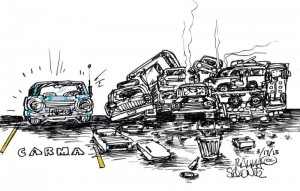
My son Ted parked his car at the Brookpark Road Rapid Transit lot and flew to Las Vegas. The Rapid Transit lot was cheaper than the nearby airport lot. My son didn’t come back. I thought he was going on a vacation, but he got a job in Las Vegas and stayed for a long while.
My son’s 2007 Ford Focus sat in the Brookpark lot for two months, until my wife, Alice, and I loaded our car with jumper cables and a generator air pump and drove to the RTA lot, which is next to Ford Engine Plant #1 and a couple strip bars. I said to Alice, “Ted’s car is technically in Brook Park, not Cleveland. That’s good. If the car has been towed or stolen, we can deal with Brook Park red tape better than Cleveland red tape.” But the car wasn’t towed or stolen. It was there. The doors were unlocked, and the tires were low, and there was a bottle of bourbon in the backseat.
I drove Ted’s car to the Lusty Wrench in Cleveland Heights. Sam Bell, the mechanic, said, “The car is basically in good shape with 89,000 miles. The battery will not make it, and as you know the side-view mirror is taped on. But the tape actually is not a bad solution. The rear tires are round, black and hold air. The car is serviceable.”
What I want to know, Is Greater Cleveland really this safe? I need more data. Please park your car for two months at a Rapid stop and tell me.
–
Rerun
September 13, 2017 2 Comments
