
SCHOOLED:
DONALD HALL AND ME
I was in my car in the grocery store parking lot, listening to Terry Gross interview poet Donald Hall, my old English professor.
Gross asked Hall how he liked being old. Hall couldn’t complain, he said, but then he did for several minutes. Hall talked about how he had published a story in the New Yorker in which a security guard at the National Gallery had treated 83-year-old Hall like a child; the guard had leaned over to Hall, who was in a wheelchair, and asked, “How was din-din?”
I could listen to Hall talk about aging all day. I didn’t really want to get out of my car and shop for prunes, yogurt and salmon.
I used to be a lot younger . . .
Fifty, for instance. In 2000 my then-teenage son attended a New Hampshire summer camp an hour from Hall’s house. I visited the camp on parents’ day. Should I look up my English teacher? I had taken courses from Hall 30 years earlier?
Maybe Hall lived way back in the woods. Maybe he sat on his front porch with a shotgun. I didn’t know.
Hall’s house was not deep in the woods. It was about 50 feet from a federal highway and across from a summer camp. (There are a lot of camps in New Hampshire.) He could sometimes hear “Reveille.”

Don Hall at family house, New Hampshire, 2006 (Photo by Ken Williams/ Concord Monitor)
Hall was happy to see me, and said pretty quickly, “I’m rich.” Hall made his money mainly from his award-winning children’s book Ox-Cart Man. Only a poet would ask, “Are you rich?” He added, “How about you?”
“I’m doing OK,” I said. I had a kid at a New Hampshire summer camp. Enough said.
In 1973, when I had graduated college, Hall discouraged me from returning to Cleveland. He had said, “Why do that — to sell insurance?”
I went home. I “sold insurance.” I joined my father’s real estate biz.
Hall took me to a fancy restaurant near his farm. I said, “I own and manage apartment buildings. I’m a landlord. And I play clarinet.” Meaning: I can improvise. I’m still in the arts!

Donald Hall and Bert Stratton New Hampshire, 2000
My first year at Michigan, Hall had looked like a stock broker. He went hippie about a year later, I think. In New Hampshire he wore a hippie shirt, and I was the guy in the polo shirt.
Hall quit his tenured job at Michigan in 1975 and moved to his grandfather’s farm near Wilmot, New Hamphsire. Hall did exclusively freelance writing.
At the restaurant, Hall said he had traveled to the Amazon River on a private jet with a Michigan grad who had made it big in the movie business. The student owned a movie company. Hall said, “His family was in the grocery business in Detroit, until I warped his mind.”
Hall warped many minds. He told me to guard against bitterness. His late wife, poet Jane Kenyon, had died five years earlier, at 47. I remembered her from English classes.
Hall had struggled with colon and liver cancer, which was supposed to have killed him, but didn’t. Instead, his wife died from leukemia. He said, “Every generation thinks they know more than the next generation. Schopenhauer was writing about this in the 1700s. You don’t know more than the next generation.”
Hall wouldn’t even let me pay the tip.
The next day I drove to Manchester, New Hampshire, and flew back to Cleveland to evict people, fix leaky faucets and collect late rents. It was not poetic.
Eleven years later I mailed several of my published op-eds to “Donald Hall, Eagle Pond Farm, New Hampshire.” (He doesn’t use email.) I wrote: “From your student — your 61-year-old student.” I dated the letter. Hall is big on dates.
Don wrote back, “I know you know I know that you feel old and know you are not.”
Get out of the car. Buy the prunes, salmon and yogurt –- and some beers.
I want to make it to Hall’s age.
—
Donald Hall, 84, is poet emeritus of the United States and a recipient of the 2010 National Medal of Arts.

Donald Hall and Barack Obama, 2011
—
by Ralph Solonitz :
January 8, 2013 No Comments
I CRY A LOT
Charlie Chaplin brings me to tears. Louis Armstrong and Beethoven do too. T.S. Eliot — yes, I know he didn’t like Jews — but you can’t deny his greatness. For instance, “Humankind can not bear too much reality.”
Yes, reality blows — as we used to say in junior high. (We said the “blows” part.)
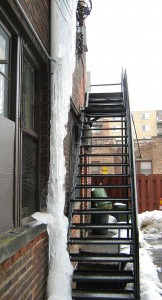
Art?
I escape to the arts. I escape to this:
Fire escapes have to be painted every year in Cleveland, or they rust.
I used to be shallower, vainer, younger and facetious. Now I’m all that, and older.
I’m thinking of getting elevator shoes. A couple inches might change my life.
I don’t like ferrets.
Go ahead, indict me.
Indict me on this too: Anglomania, Jewmania and prickliness.
Downton Abbey — the TV show — is terrific. Everybody is so taciturn and proper. Nobody runs his or her mouth.
Who’s a Jew? That’s my second obsession. I annually debate whether Brubeck was a Jew. He wasn’t. Or was Chaplin Jewish? No, he wasn’t.
Prickliness, that’s a universal trait. I cut off a man’s position in the check-out line at Dave’s supermarket. The man said, “What you doin’?”
“I’m ahead of you.”
“No, you ain’t. You moved!”
I had moved for a second! I had left my cart in one line and walked to another line to see which was shorter.
I said “you win” to the man, and let him in front. He got out of the store before me!
I’m looking for elevator shoes.
I cry a lot.
—
SIDE B
This one is real. The above post is half real.
FIRING SABINA
It’s easy to fire a drunken building manager, or a thieving one, but it’s hard to fire a manager who is only lousy.
For instance, he doesn’t answer the phone quickly enough, or he doesn’t clean enough.
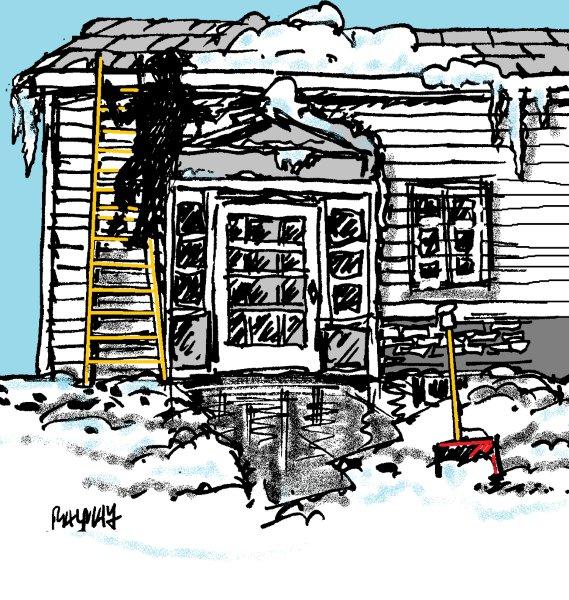 I thought about firing Sabina; I had hired her husband, not her, and her husband had skipped out on her. She was shoveling snow, cutting grass, and climbing ladders. It wasn’t her strong suit; she had majored in Russian lit at a Russian university.
My tenants reported negative things about her.
That helped — me.
I asked a tenant how the manager was performing, and he said, “I hate her.”
“Do you hate me too?” I said, trying to establish a baseline on his “hate.”
 He didn’t hate me. “She doesn’t clean, she has her kids cutting the grass, and she doesn’t tell us anything — when anything is going to get fixed.”
I fired her.
Then I rehired her. She couldn’t get welfare because she had no green card. I let her stay.
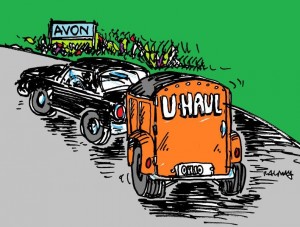
Avon calling
She found a boyfriend – a guy in Avon Lake – and moved out.
I owe that guy in Avon Lake.
—
“Sabina” is a pseudonym.
January 2, 2013 3 Comments
TRUCKIN’
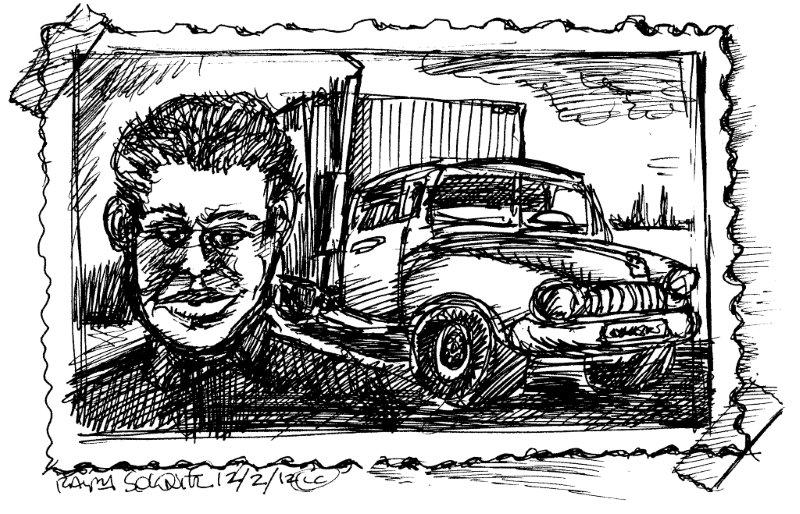
My cousin David owned a GMC tractor-trailer, which he parked in the May Co. lot in University Heights. David may have been the only Jewish long-distance trucker in the Heights. Maybe the only long-distance trucker, period, in the Heights.
In 1975 David borrowed several thousand dollars from my father, Toby, for the truck. David had a contract with International Truck of Rock, Minnesota.
David moved to Pennsylvania and never repaid my dad.
In high school David had stolen hubcaps. He had been a Shaker Heights juvenile delinquent.
David even looked like James Dean. My cousin Danny once said, “David’s dad was the most handsome man you ever met.” David’s dad drifted around Cleveland, playing pool. David’s dad and mother divorced in the 1950s.
When David’s mother heard David hadn’t repaid my dad, she made payments, but she never fully repaid the loan.
My father’s attitude was “win some, lose some.” Toby believed in lending money to family. My dad had borrowed from his Uncle Itchy to buy his first house.
Last year I called David’s sister. This was a big deal; David and his sister were out of the cousins’ loop. David is now in his seventies and has had several heart attacks, his sister said. He is living in a hotel that his son runs in Florida.
No more truckin’.
No more David as family black sheep. Stolen hubcaps and an unpaid loan, is that the worst of it in my family? I think so.
Now, my wife has an estranged cousin who stole sterling silver . . . Stop.
—
“David” is a pseudonym.
—
SIDE B
FITBIT
I became bionic. My daughter, Lucy, gave me a pedometer.
I can count my daily steps. I can even monitor my sleep patterns, but that’s too much data — even for a guy like me who likes data.
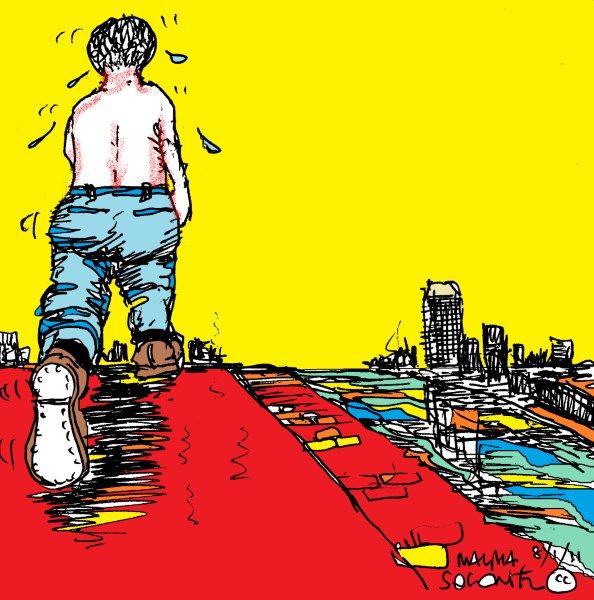 Brisk walking. If you do it, ipso facto, you’re a dork.
I gave up jogging last year. My right knee wasn’t into it anymore. I miss the “sweat” of jogging.
I walk.
Should I post my step count here? Dieters post their calories online. Bicyclists post their heart rates.
My step count today is _____. (Will post up at 11:59 p.m for maximum effect.)
Your count?
—
For a couple new illustrations by Ralph Solonitz, please scroll down to “KlezKamp 2012,” which went up last week.
—
Yiddishe Cup plays at First Night Akron on New Year’s Eve.
December 26, 2012 1 Comment
THE BIG THRILL
I went to the White House for a Christmas party. Did you?
My daughter, Lucy, works for a Chicago event-planning company, and she helped decorate the White House for Christmas. She got me in.
Lucy and I arrived fashionably late, because my daughter has been to the White House before, and she didn’t want to wait in the long line. We were the last guests — numbers 485 and 486.
I was denied entrance. What?
I sat on a folding chair in a heated tool shed–like room in the White House backyard. My birth date was listed incorrectly on the White House checklist. I thought I might miss the party.
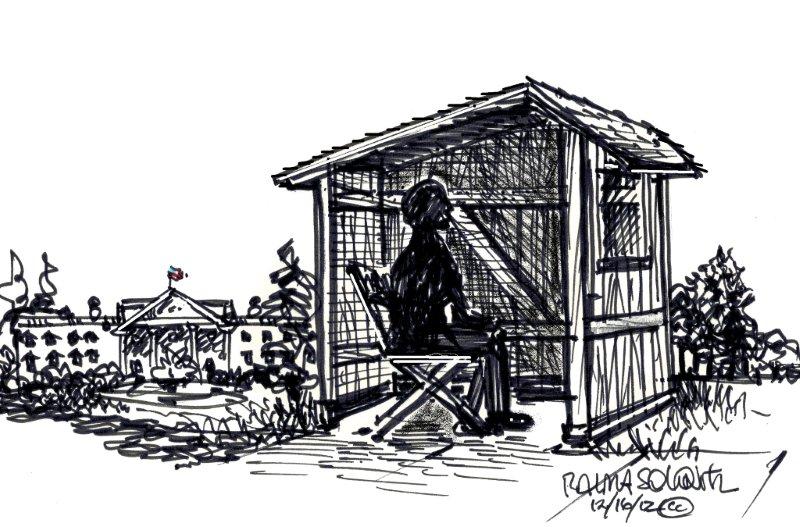
But the guard, constantly checking her smartphone for updates, finally said, “You’re good. Tell the next security booth, you’re a re-clear.”
I was a re-clear at the next security stop — a dog-sniffing station.
A Marine Band jazz quintet played in the main entrance of the White House. Michelle Obama was there. Lincoln’s portrait was up in the State Dining Room. There were 54 live Christmas trees, according to the Washington Post. Plus some fake trees — classy fake trees, like out of glass.
I told the Marine Band’s bass player to tell his boss to bring in Yiddishe Cup for the Chanukah party next year.
I did not see Bo the dog. I did not sleep in the Lincoln bedroom. I did not see any celebs. The food — at grazing stations — was very good. Spielberg, dressed like Lincoln, was at the White House a couple nights before, to screen Lincoln with the president. That was the word at the party. There was a 300-pound gingerbread replica of White House.
This event was a thrill for me — a once in a lifetime experience. No, wait, I’ve got to talk to my rabbi; he once lit the White House Chanukah menorah. Maybe he’ll know how to get Yiddishe Cup in.
My rabbi called. He said, “Somebody from the synagogue got me in. Or a group of people. No one person from the synagogue took sole credit. Maybe the White House wanted somebody from Cleveland.”
The Jews of Cuyahoga County. Work with them.
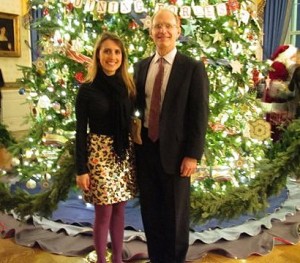
Lucy Stratton, Bert Stratton, and Claus.
White House, 2012
—
SIDE B
KLEZKAMP 2012
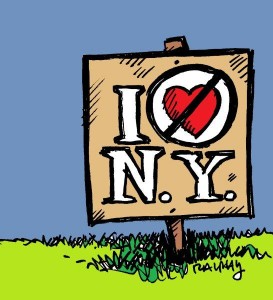
This year’s KlezKamp theme is anti-NY.
No rush-rush.
The KlezKamp swimming pool has piped-in klezmer music. Don’t do the crawl; your wildly flapping arms will drown out the underwater speakers. (Kapelye’s classic, “Chicken,” is looped.)
New this year: a pretzel bar . . . Rold Gold, Dan Dee, Snyder’s of Berlin, Snyder’s of Hanover. (Trucked in from Cleveland. Heymish.)
There is a spiritual gathering every morning in the exercise room. Universal love machines. Yarmulkes optional.
You can touch your musical instrument but can’t play it. Oil keys, apply grease to cork joints, rub valve oil. And calm down.
 Dress code? Only if you insist. Try the all-cotton plush bathrobes with the KlezKamp logo ($179). Notice how young klezmer musicians wear KK bathrobes on stage?
At KlezKamp, director Henry Sapoznik repeats the same spiel every hour, so you don’t miss anything if you skip a lecture. His topic this year: “New York Sucks. I Moved to Wisconsin.”
Also, this year pianist Pete Sokolow blots out — pours Manischewitz on — his classic how-to book, 100 Jewish Music Insults That Really Work.
Before this book disappears forever, here are, for the record, Sokolow’s five favorite putdowns:
1. What’s your phone number? Junior congregation needs a clarinetist.
2. You’re slicker than butter on matzo, but there’s no salt.
3. Tighten your neck strap. Tighter.
4. You couldn’t find D freygish with a GPS.
5. I make desk lamps. Let me see your clarinet.
—-
This is KlezFiction. KlezKamp is real. It happens next week.
December 19, 2012 7 Comments
THE REAL WORLD (PARTS I and II)
PART I
I worked at a key warehouse as big as Home Depot. But just keys. The warehouse supervisor drove a golf cart.
I packed car keys. This was a summer job.
My dad worked in the front office.
My shift was about seven hours too long. I rested on my cart for massive breaks. Sarge, the warehouse supervisor, threatened to fire me, but he had a problem — my dad (aka the front office).
I told my father I wanted out of the job; I didn’t want any more money; I didn’t want a car; I didn’t want a UAW card. I had several thousand dollars from my bar mitzvah money. Let me go. I could be in Barcelona in a minute.
But I was stuck in the warehouse. Big presses stamped out car keys. Kaboom.
A band instrument factory was right next door. Why couldn’t my dad work there? King Musical Instruments. King had an employee who stood at the end of the assembly line and blew saxes all day.
Next time around, work at King, Dad.
PART II
The taxicab supervisor, smoking a stogie, asked, “Where’s Charity Hospital?”
“I don’t know, ” I said.
“Where’s the Federal Building?”
“Ninth Street.”
“The Pick-Carter Hotel?”
“I don’t know.”
“The Hollenden House?”
“Downtown — St. Clair.”
“People want to know where their hotel is,” he said.
Fair enough.
But hired me. Yellow Cab.
I drove welfare recipients with vouchers to hospitals, and workers to Republic Steel Works #4. I didn’t drive many rich people; I thought I was going to drive rich people, but it was poor people.
I picked up a fare downtown. The customer said, “Severance Hall.”
“Are you Claudio Abbado?” I asked.
“How do you know!” he said.
I knew because I had seen hi’s picture in the morning paper.
I stopped at my neighbor, John, afterward, and told him I had just driven a famous person. I said, “He’s a conductor from Italy.”
“Why did he come here?” John said. John’s favorite expression was “Cleveland is the armpit of the nation. ” Put that slogan on your cab door. This was 1970.
Taxi driving ultimately didn’t agree with me. A cabbie told me to carry a bat. He said, “A bat isn’t a concealed weapon. It’s legal.”
I had a low batting average.
My cab stalled at Fairmount Circle. The engine smoked. I left the cab and hitched back to the Noble Road garage.
The supervisor said, “You mean you left your cab, son?”
“I knew I could get back here. ”
“You mean you left your cab unattended?”
“Yes.”

Fairmount Circle, 1970
December 12, 2012 No Comments
WEDDING ALBUM
1.
When a groom shops for a band, he doesn’t care what he gets. He is usually on assignment from the bride. I’ve rarely heard a groom say, “Yiddishe Cup is wonderful!” It’s more like “What’s your minimum — minimum hours and minimum rate?”
 One groom said to me, “Let’s cut to the chase. What’s your price?”
I gave him a fair price and we made a deal. Bye.
A friend told me to act more alive on the phone. She coached me: “Say, ‘Hel-LOH, this is Bert STRAT–tin!’’ I did it that for one day.
If a groom likes the price, beautiful. But he might call the next day and say, “Man, my fiancée is just totally unwavering! She wants this horrible other band now. If it were up to me, I’d have you. Change of plans, sorry.”
“No problem,” I say. “Marriage is full of compromises. Get used to it.”
Old bandleader advice.
2.
When a bride asks about cool wedding venues, I mention Windows on the River in The Flats, the Cuyahoga National Park (Bath, Ohio), the Shaker Country Club and Manakiki club.
Brides — at least some of them — don’t want the standard wedding mill, aka Landerhaven party center, by the freeway in Mayfield Heights.
On a typical Saturday night at Landerhaven, the place is hopping with four or five parties: there is background jazz in the Michelle Room; in the East Ballroom, an Asian Indian DJ; in the Lander Room, Yiddishe Cup. During breaks, I hop from one party room to another, talking to musicians and sightseeing. At a Sikh wedding, the groom rides through the parking lot on a white horse to meet the bride.
Landerhaven’s food is good, and the help is attentive, but Landerhaven is very faux Fontainebleau — so many mirrors and fountains. Brides often want less.
Yiddishe Cup played a gig where the bride married an American Indian by a creek. It rained the whole time. That wedding moved into a lodge, which held, at most, 50 people. We could barely find room to toot our horns. At Landerhaven, you’re not going to have problems like that. Landerhaven is well-run. No surprises at Landerhaven, except maybe the guy on the white horse.
Another option: rent a tent. Some Jews love to worry and the tent is perfect for that. At one tent gig, in Dayton, Ohio, the caterers used 30-gallon wastebaskets to catch the rain pouring in.

Yiddishe Cup's Steve Ostrow, Hunting Valley, Ohio, 2010. No rain.
3.
Yiddishe Cup played a wedding for an anthropology professor and a German professor.
Here’s how it went down, anthropologically speaking:
a) In the Midwest, the band often works Ohio State and Michigan into the repertoire. The anthro prof’s mother was a Michigan grad, and the groom’s dad was from Ohio State. We played “Hang on Sloopy” for Ohio State and “Hail to the Victors” for Michigan.
b) Yiddishe Cup’s bassist sang “Du, Du Liegst Mir In Herzen.” This bombed. The German guests — real Germans from Germany — didn’t like it. Apparently, Germans don’t show much outward pride in their folk culture. And at a Jewish wedding, who can blame them. (Yiddishe Cup has played “Alouette” for French Canadians and “Guantanamera” for Hispanics, and they like hearing from us.) The Germans were no funt.
c) When Yiddishe Cup had a wedding guest sing with us, I said, “Attention, anthropologists, please welcome one of the stars of Jewish pop. He has appeared all over the world . . . Yehuda Cik!” Yehuda is a former neo-Hasidic Ortho pop star. Yehuda sang the last verse of L’Cha Dodi, the Sabbath welcoming prayer. Big hit.
4.
Sometimes the bride and groom are starry-eyed; sometimes, not.
Years later I run into the moms of the brides. The moms tells me the “kids” are now divorced — the starry-eyed kids.
I run into an old groom. He says, “Isabel and Isaac, this is Mr. Stratton. He played Mommy and Daddy’s wedding.” Was the groom starry-eyed at his wedding? Give me a break. I can’t remember. I play a lot of weddings.
The groom is still married after 12 years. He says his daughter’s bat mitzvah is coming up. “She’s a popular kid,” he says.
“That’s bad. Popular kids usually want DJs,” I say.
—
Two add-ons . . .
1. Dave Brubeck vid
—
2. On the CoolCleveland.com website, 12/6/12. “Keep the Plain Dealer Dealin’.”

December 11, 2012 2 Comments
THE TOP 12 KLEZMER RECORDS
OF 2012

Notso Kosher Records
My desk is piled high with free CDs: Ezekiel’s Wheels, Golem, all kinds of Dutch and Polish bands, and the old standbys — Klezmer Conservatory Band and the Klezmatics.
The 12 best klez CDs of 2012 jumped out of the pile and said, “Kiss me, I’m Jewish.”
These recordings (listed below) are the nonrequired klezmer albums for the year. These recordings are essential:
 1. Orlando, 3 Days, 2 Nights. Frank London and his Klezmer Brass All-Stars lead us on a klez tour of Disney World. Talk about selling out – but a good selling out. The cut “Mickey’s Philharmonic” features London on electric toothbrush — pulse position. “Whistle While You Work” is all about short people — Jewish short people: Billy Crystal, Abe Beame and Menachem Begin, and that’s just the first 30 seconds.
2. I Believe in Cod. Andy Statman flips out. Sample lyrics: “May cod bless you and guide you . . . . Praise cod in the high heaven and in the deep sea . . . Teeming oceans, fire and hail, snow and mist, storm and wind, obey cod’s will.”
 3. The Room Where I Was Born. Violinist Steven Greenman recreates the aural architecture of his childhood bedroom in Pittsburgh. Check out the Steelers pennants and Fiddler on the Roof LPs. Greenman does a cover version of the Klezmorim’s “Medyatsiner Waltz,” which itself was a cover. Sweaty and no A/C.
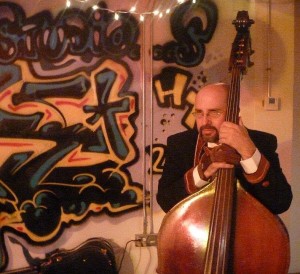
Alan Douglass, Yiddishe Cup enforcer, 2011
4. This Can’t Be Klezmer by Yiddishe Cup. This Ohio band goes outside the matzo box and constructs a toy jail, complete with corporal punishment. Perfect for the heartbroken, horny and dead. Yiddishe Cup mixes barely adequate musicianship with a touch of humor. On “Toot,” an earthy trombone solo morphs into a mimicry of flatulence. It doesn’t sound like klezmer, but what did you expect from This Can’t Be Klezmer?
5. Nonhierarchical Dynamics by tsimblist Pete Rushefsky. Nothing on the 1 and 3; it’s all off-beats. Drives you crazy, but in a provocative way. There is an after-party. You have to be in New York City to get full value. Beer by Brooklyn Brewing. Be there.
6. The Recluse by Merlin Shepherd. Shepherd, a British clarinetist and actor, reads Thomas Hardy poems while his wife, Polina, does consecutive Russian translation. The clarinet licks are sparse, but apropos to lyrics. Novel.
7. Correspondence by Michael Wex. Wexmaniacs, you’ll love this: 60 LOL minutes of Wex badinage from his KlezKanada emceeing. Can anybody top Wex’s Walter-Brennan-is-a-Jew riff? No. Almost as good: Wex’s riff about trash-talking Miami Heat Yiddish-spewers. All but LeBron, who remains the Hebraist.
8. Odorless and Colorless. Shtreiml. Bandleader Jason Rosenblatt spent years in the lab on this one. This record is rotten. It contains sulfur. Le jazz hot — and funky — from Montreal.

Jack Stratton, about 2008
9. Without a Net. Acrobat-and-drummer Jack Stratton uses metal parts from surgeries gone bad — mostly hip replacements — to perform Meron-klez drum licks. Particularly good: “Blur Blind,” “Bodies Thrown Back” and “Clarity.” The rest of the album is pretty conventional.
10. I Want to Make You Edible by Yiddish Princess. Lead singer Sarah Gordon does freestyle rapping here about cereal (Kashi Autumn Wheat and Island Vanilla), which leads to kishke, which leads to ka-ka. Juvenile. And fun!
11. Red-Dirt Jewboys. Margot Leverett and the Klezmer Mountain Boys go down to Georgia on this one. How does Margot balance her terrific cross-cultural composing and heavy drinking? Margot is the klezmer mixologist for the 21st century. Her next album is, efsher, Klezmer Gamelan?
12. Blackout. Henry Sapoznik and the Original Klezmer Jazz Band give us a wake-up call: Pete Sokolow pounds stride-piano chords while Sapoznik plays electric banjo. On the last cut, Sapoznik smashes his banjo and picks up a clarinet. Tons of squeaks. Sapoznik whines like a fourth-grader at the end: “I quit! I quit!”
December 5, 2012 6 Comments
ALBANIA, ALBANIA
Merjeme Haxhiraj, a tenant, tried to get her rent reduced. She wrote, “Mr. Albert, I wish you will only rise the rent to $470/month. I think you will fulfill my wish.”
She wrote this letter annually (changing only the dollar figure). I knocked her rent down to $490 from $500 the last time.
Ms. Haxhiraj was Albanian, worked in a nursing home, and had cancer.
After 10 years, she said she was moving. I couldn’t figure out where to. New York? Albania? Some place where I couldn’t find her, I bet.
She didn’t want to pay the final month’s rent. She wrote, “I am leaving country and will not have forwarding address. Please keep the security deposit.”
Wait a minute, Ms. Haxhiraj, the tenant has to pay the final month’s rent! I knocked on her door and said, “We need the final month’s rent, Ms. Haxhiraj. That’s the rule.” (I said Hacks-er-aj. Totally wrong no doubt. Loved the x.)
“I am old woman. I no work for three years.” And don’t forget the cancer.
I walked through her apartment. “OK, but don’t leave anything,” I said. “Take everything.” I pointed to the hangers in the closet. “Even the hangers.”
“Everything go,” she said.
“Not that it matters, but are you Christian or Muslim?” I asked.
“Muslim.”
I was curious. That’s all. I try to make my job as interesting as possible.
When Ms. Haxhiraj moved, she left a bed, five chairs, a sofa, handbags, four bags of garbage, many oranges, several chocolate bars and a lot of hangers. No gym bag. I needed a gym bag.
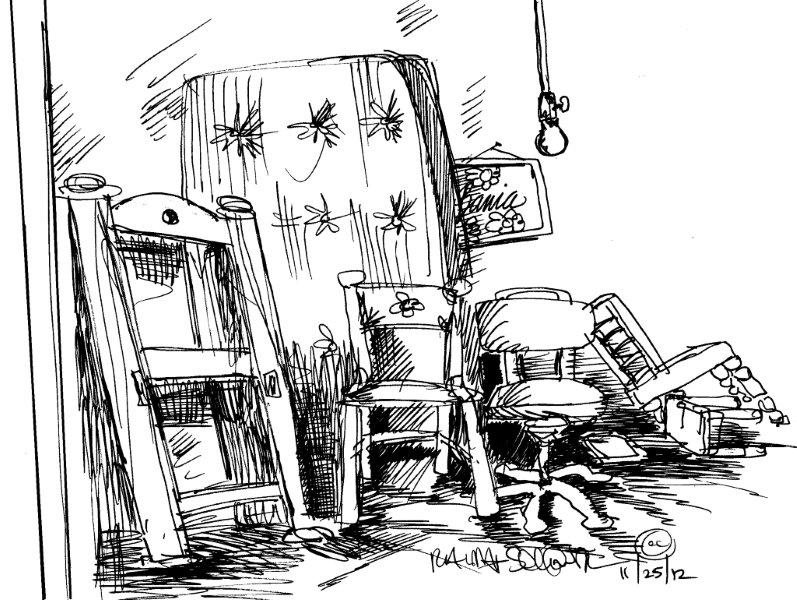
The little old lady from Albania, Albania . . .
I didn’t get the chocolates. The building manager beat me to them.
I got the hauler’s bill.
November 28, 2012 No Comments
A COUSIN GROWS IN BROOKLYN
 The place: Brooklyn
The venue: the Barclays Center.
The show: Jay-Z on the mic.
The kingpin: Cousin Brucie Ratner, owner of the Barclays Center.
Brucie isn’t my cousin, and I don’t know Jay-Z’s music. But I felt part of the Barclays Center’s grand opening. I walked around the outside of the arena.
Furthermore, I occasionally play gigs for the Ratner family in Cleveland. The Ratner patriarch — Albert — likes “Oyfn Pripetchik” (At the Hearth). Albert doesn’t even have to ask.
Bruce Ratner told the New York Times he used to be embarrassed he was a developer. He was an anti–war protestor back in the day, he told the Times.
Brucie is me x 1 billion dollars.
I was at a wedding in Brooklyn. Beyoncé’s sister was there. I sat across from Beyoncé’s marketing agent. (Jay-Z is married to Beyoncé.)
The music at the wedding was arena quality. A gospel singer from the Blind Boys of Alabama sang the ceremony. A doo-wop group did the cocktail hour. An eight-piece New Orleans brass band walked into the wedding through an industrial garage door and wailed for hours.
Where was I — other than two miles from Jay-Z? I was in a former brass foundry, close to a toxic site, the Gowanus Canal.
I saw guys in Brooklyn Nets T-shirts.
My band, Yiddishe Cup, once played the Brooklyn Center for the Performing the Arts in Flatbush. Not too cool, apparently. (My band or Flatbush?)
I think the wedding venue was in Red Hook, a section of Brooklyn. Not sure. Maybe Carroll Gardens (another Brooklyn neighborhood). I like to know where I am.
Boys, hit ’em with “Oyfn Prip.” Cousin Brucie might drop by. Just like back home. (There is a Brooklyn, Ohio.) Jay-Z in the house? Strike up “Money, Cash, Hoes.”
—
SIDE B
TOO SMOOTH
I sat on a bench at Horseshoe Lake and read the Cleveland Jewish News. I felt like Isaac Bashevis Singer with the Yiddish Forverts. (Typical Singer opening: “While I was sitting on a park bench I noticed that my left shoelace was untied.”)
I had a letter to the editor in the CJN and wanted to make sure the paper got it right.
The park bench at Horseshoe Lake had a plaque: “In loving memory of Arthur Lipton. He played at Carnegie Hall.” My question: Did Arthur Lipton get paid, or was he in a youth orchestra? Did they — the orchestra — rent Carnegie Hall?
The CJN got my letter right.
The “wombs and tomb” section of the CJN is the crux of the paper: the births, bar mitzvahs, weddings and deaths. Deaths are always a good read. Who owned what business. Who fought in Japan. In the weddings, there is usually a U. of Michigan grad. Does every Jewish family in Cleveland have a Michigan connection? I skip the bar mitzvah and birth announcements; I’m too old for those, or not old enough.
On returning from the park, I saw a dog crapping on my front lawn. I paused at a distance, to see if the owner would clean up. She did.
Great day.
Snack time: I opened a new jar of peanut butter.
It was creamy! I bought creamy by mistake!
Heinen’s should be more distinctive with its labels:

My (future) park-bench epitaph: “Albert Stratton preferred crunchy peanut butter.”
November 21, 2012 4 Comments
I’M TWICE AS OLD AS YOU
I liked to provoke my mother-in-law. She would say, “They’re wearing their hair high in the 1940s look.” And I would say, “Who’s they?” Or she would say, “I don’t have any shoes to wear tonight to the party.” And I would say, “You going barefoot?”
I shouldn’t have been such a smart aleck. I hung around Harvey Pekar, who was inspirational — very bitter. “I’m hateful,” he said. “I’d like to have a cool way to slip my George Ade article to Lark [Pekar’s second ex-wife, an academic]. She’s small-minded. Who wants to dig through Ade’s school grades? So what. I want to do something more creative.”
This was in 1981.
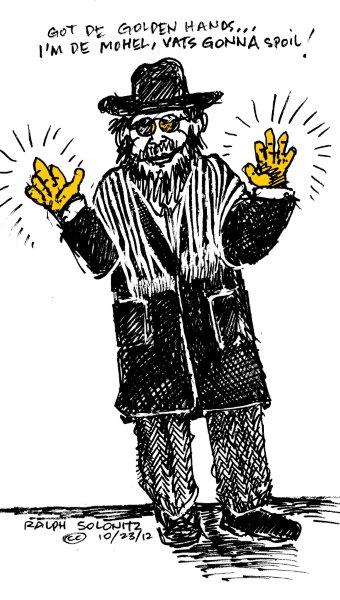 Now I’m twice as old as my son Ted. Exactly twice as old. He’s 31. Pekar was at Teddy’s bris. Pekar considered writing a comic about the mohel raising his hands like a prize fighter and saying, “Golden hands!”
Ted has been a newspaper reporter and taught English in Korea. He has a law degree. He was on Jeopardy. He has worked temporary crap jobs, too. He has done a lot, but he’s still only half my age!
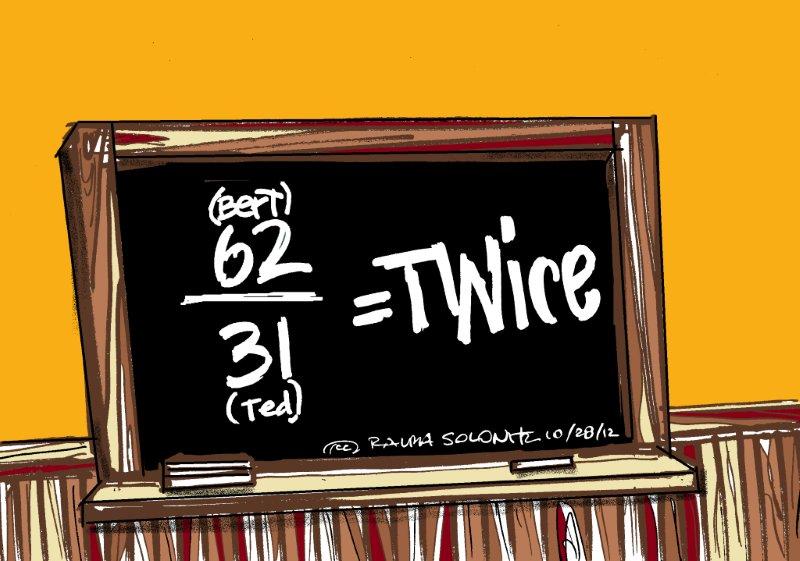
Here’s what I’ve learned in the past 31 years:
1. Guard against bitterness
2. Make your job interesting
3. Do something beneficial for others
4. Zekhor (Remember)
5. Get married and have kids
6. “Don’t just view it, do it” (Shari Lewis)
7. Old people are dumb! (joke)
8. Don’t judge people by bumper stickers, neighborhoods, or their tastes in music.
I hope to list 10 items by the end of the decade. (Make it to the end of the decade, then worry about the list, dude.)
***
When my youngest child, Jack, moved to California last year, I held a mini-shiva; I walked through the music room in the basement and threw out old mic cables, cassette tapes and tons of drumsticks.
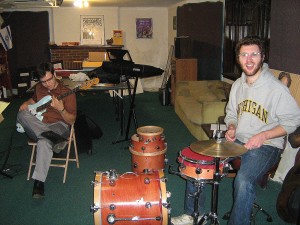
Eli “Paperboy” Reed (L) and Jack Stratton down the basement, 2011
Jack took his drums and an electric bass out west. I called him when he was driving through Nebraska, and said, “Did you open the letter I wrote you?”
“Yeah,” he said, “my friends thought it was funny that on the envelope you wrote, ‘Don’t open till Nebraska.’ They thought it contained hallucinogenics.”
I’m anti-drugs! I was dispensing wisdom-in-a-can (in an envelope) to my youngest child. If he could combine my old guy’s experience with his 24-year-old’s enthusiasm and creativity, he would do fine. [Story about the letter is here.]
I filled up four contractors garbage bags in the basement.
I hauled the stuff to the tree lawn on garbage day. An hour later, three bags were gone, but the fourth remained. A junk man had picked up three bags. And I had put some paperwork in those bags, as well as Jack’s garbage.
Mac — the junk guy — pulled up the next week in a pickup truck. He said he liked my trash, particularly the ersatz medieval knight’s helmet from my son’s high school days.

I said, “What about the paperwork?”
He said he had pitched that. Good. I didn’t want my identity stolen that day. He handed me his card.
Age 24 is when you have the least amount of possessions. Now Jack has even less –- four bags less.
And Mac has some good stuff, like the helmet.
—
Yiddishe Cup is at the College of Wooster (Ohio) 9:30 p.m. Sat. (Nov. 17). More info here.
November 14, 2012 5 Comments
THE ELECTORAL COLLEGE
(OF YIDDISHE CUP)
Yiddishe Cup has played in 19 states and Ontario.
Our most recent state is Massachusetts.
I didn’t tell anybody about our Massachusetts gig, except Ari Davidow, the dictator of Klezmershack, a Boston-based website.
I didn’t shout, “We’re playing Boston!” Wouldn’t be right. I didn’t want to drive the Mass. bands crazy. There are so many good Jewish wedding bands in Massachusetts.
How did Yiddishe Cup get the Massachusetts gig? Connections. My cousin Margie. She hired us for a wedding.
Mass. football huddle
The band stayed at the Marriott near the Natick mall. The food court at the mall had take-out Indian food; you don’t see that very often in Cleveland.
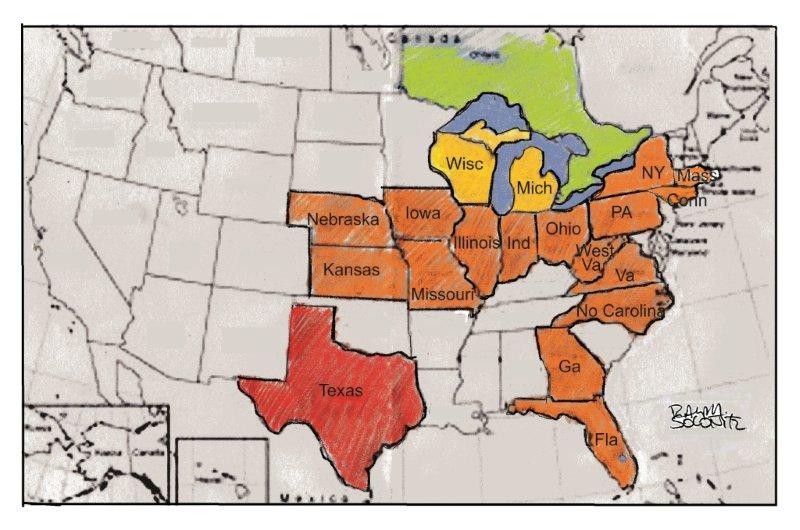
Yid Map
Notice, we haven’t played Kentucky. That irks me!
Daniel Ducoff — Yiddishe Cup’s Sir Dance-a-lot — collects refrigerator magnets of states Yiddishe Cup has played. Twelve years ago, I gave Daniel magnet-investment advice. I told him to buy “Kentucky.”
Kentucky is ridiculously, abuttingly close to Ohio.
What’s with Texas? We’ve played Texas three times. Once at Temple Emanu El in Dallas, and twice at the Chamizal National Memorial park in El Paso.
Some people think Yiddishe Cup plays only in Cleveland. I hope this map straightens them out.
Buckeyes and fellow travelers, here are the Ohio towns we have played. (Obama and Romney have nothing on Yiddishe Cup.):
Elyria, Akron, Lorain, Warren, Youngstown, Oberlin, Wooster, Lakeside, Toledo, Springfield, Alliance . . .
Kent, Canton, Granville, Gambier, Lancaster, Findlay, Columbus, Delaware, Hiram, Cincinnati, Dayton, Oxford, Celina, Urbana.
You can find good Arabic food in Toledo.
Gambier is not a real town. It has a post office, bookstore, pizza parlor and Kenyon College. Mount Vernon — an authentic town –- is just a few miles from Kenyon. Hey, we played a wedding in Mount Vernon. Please add “Mount Vernon” to the list.
Yiddishe Cup probably won’t play on the West Coast unless one of my sons marries a West Coaster and the wedding is out there. That’s our best hope. Boychicks, you can use a DJ for the breaks. No problem.
 Yiddishe Cup’s number-two hang-out state is Michigan . . . Ann Arbor, Detroit, Flint, Kalamazoo, Calumet, East Lansing, Evert and Grand Rapids.
Calumet is in the Upper Peninsula. We flew there via Minneapolis. We should have played for change in the Minnie airport so we could color in Minnesota on the map.
Michigan has so few cities. What percentage of Michiganders live in Metro Detroit? My guess is 33 percent. [42 percent –- Google.]
Mappin’ . . . Have you looked at a map today? (Electoral College maps don’t count.)
—-
My op-ed “It’s Campaign Season; Ohio is Swingin‘ was in the Sunday Cleveland Plain Dealer. (Similar to post below.)
November 6, 2012 2 Comments
OHIO’S STATE
(A version of this post appeared in the Cleveland Plain Dealer 11/4/12.)
When will it end?
Superstorm Sandy or the election?
Either.
Definitely by Tuesday.
 Ohio returns to flyover status Tuesday, and I’m back to looking for celebs at Ohio Turnpike rest stops — bands and gangsters traveling from New York to Chicago.
Bill Clinton, Bruce Springsteen and Condoleezza Rice: history.
My friend Jane posted on Facebook: “Can’t wait until this election season is over so I can be sane again.”
A friend from Rhode Island asked me, “How is it living in a swing state?”
“It’s swinging,” I said. It’s sweet. We’re loved.
When I’m not loved, I’m a landlord. I receive calls from political operatives who want to rent stores for “staging areas.”
I haven’t rented to a politician in years, because politicians tend to trash stores and not pay enough rent. The campaign workers are gone the day after the election, but the pizza boxes aren’t. And where are the keys?
I’m supposed to give the store away cheap, as a political gesture. My gesture: Pay and I’ll rent to you.
“I’m Brian,” said the young man on the phone.
“Where are you from?” I asked. He didn’t sound local.
“I’m in Cleveland right now.”
“I see.”
“I need the store for a few days.”
“How many people will be in the store?”
“Twenty to 30 people. They’ll go out canvassing. Teams are sent out.”
Twenty to 30 people is a lot of foot traffic for a 1,000 square-foot store, and a lot of pizza boxes.
Plain or pepperoni.
I’ll never know. My price was too high, I guess.
—
SIDE B
From the history channel . . .
PLAYING POLITICS
When a relative ran for school board and lost, my father said, “Don’t run again. You don’t want to get a loser’s reputation.”
My relative didn’t run again.
I, too, play by my dad’s rules.
I might run. When? Not saying.
First, a little background: I was a Kennedy man. (Who wasn’t? A lot of people.)
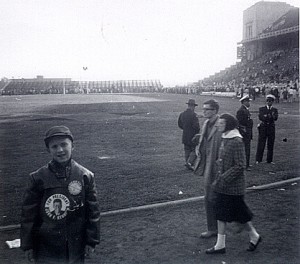
Bert Stratton w/ Kennedy buttons, Ohio Stadium, 1960
I started my own country (on paper) in sixth grade and elected presidents and representatives. My country was a solace, because in the real world I couldn’t run for president because a) I wasn’t 35 and b) I was Jewish.
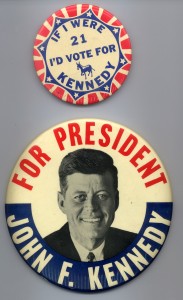 My mother said I could run and win. She duped me! My man, Abe Ribicoff of Connecticut, couldn’t even run. Newsweek said the country wasn’t ready for the Ribman for prez or even veep.
Now presumably a Jew could win the nomination for the top job.
Let me be clear: I won’t start out at school-board level or even vice president.
My Little League teammate Joel Hyatt (Cleveland Heights High ’68) ran for U.S. Senate and got clobbered. He hadn’t paid his dues; he hadn’t run for lesser offices.
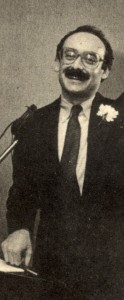
Lee Fisher wins state senate seat, 1982
Lee Fisher (Shaker Heights High ’69) paid dues. I saw him at civic club meetings in Collinwood in 1982: six neighbors, me and Lee. Fisher eventually climbed to lieutenant governor. Then he got clobbered for the U.S. Senate. He paid dues. Give him that.
I’m willing to pay dues. About $10.
My American history teacher in high school said Stratton is a good political name. (My teacher was Americo Betori. He should have run for mayor of Cleveland in 1950. He would have won.)
Stratton. Remember that name.
***
A few weeks ago at Simchat Torah, the rabbi said, “We will now read the last verse of the Book of Deuteronomy.” A Yiddishe Cup musician — not paying close attention — said, “Did he just say, ‘We will now read from the Book of Mitt Romney’?”
November 5, 2012 6 Comments
THE BUG MAN AND THE SCRAPPER
1. THE BUG MAN
Drain flies aren’t bad. Roaches aren’t bad. Mice are nothing.
Two-hundred dead flies in an apartment — that’s bad. I saw 20 in the bathtub alone. The building manager said, “I killed them with spray.”
I said, “Where are you hiding the body?” I meant the dead body.

Swarma
Another 50 dead flies were by the window in the living room. The apartment was vacant.
I called
the pro exterminator. The bug man’s secretary said, “Are they metallic – the flies?”
“What do you mean by metallic?”
“Blue or green?”
“They’re big flies,” I said “You see them all the time, like on horses.”
“Oh, excuse the expression — they’re shit flies.”
“Yes. My manager says he has 500 dead ones in his vacuum cleaner. I need you over here.”
The flies were officially called blow flies, and are attracted to carrion and excrement. The bug man found a nook above the drop ceiling in the bathroom that we had missed. He hit it.
The flies are gone now. I wonder what was up there. I didn’t look.
2. THE SCRAPPER
I was looking for a scrapper to take a dilapidated, nonfunctioning boiler out of an apartment-building basement. The boiler was sitting in the basement, minding its own business, but the city inspector said it had to go.
I called a heating company, which suggested I hire them and an asbestos-removal company to remove the old unit.
Instead, I contacted Charles the scrapper and said, “What are the chances of you doing this job and just taking the good stuff — the metal — and leaving behind a mess?”
“I don’t do it that way. I’ve been doing this all day — all my life – and I do it right,” he said.
The boiler consisted of eight cast-iron sections, each about 200 pounds. And it was down a flight of steps. The boiler was the size of a VW bus.
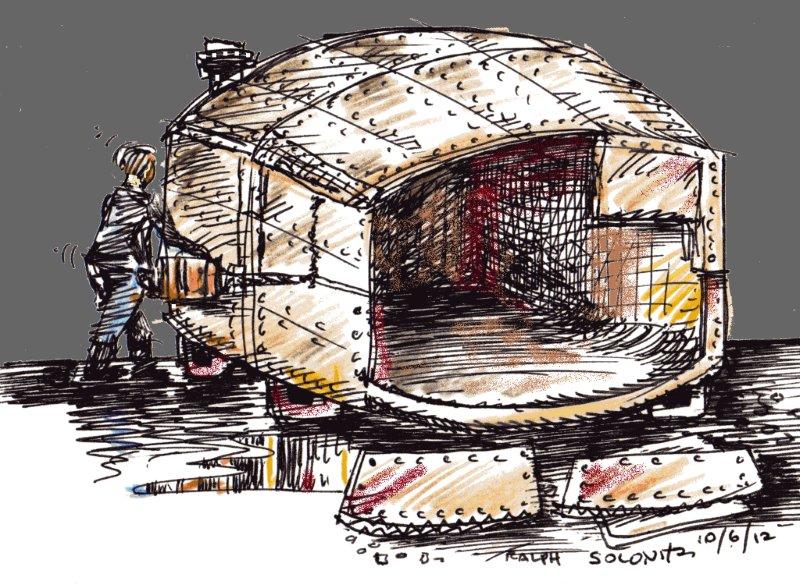
“That’s what I do,” Charles said. “Get rid of it.”
But I didn’t use Charles. I used Daryl, another freelance scrapper. Daryl got to the job site long before Charles and gave me a good price: free. “I’m here and I’m ready,” Daryl said. That counted for something.
—
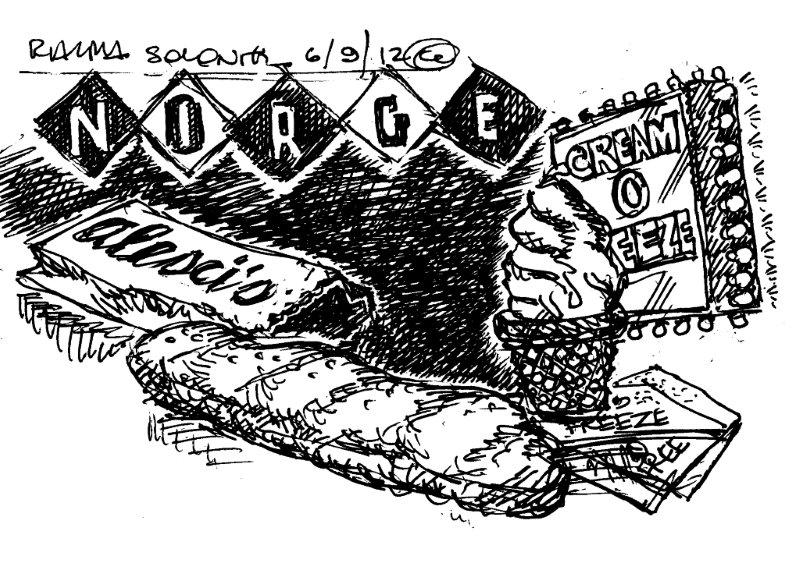
I wrote this one, “The Nostalgia Vortex,” for today’s CoolCleveland.com. I was raised by a village — Norge Village.
October 10, 2012 2 Comments
FLOOR COLLAPSES AT WEDDING
Egos Bruised, Teeth Jarred
Yiddishe Cup played a wedding in a backyard in Connecticut where the floor partially collapsed. The ground became soggy underneath the tent, which was built into the side of a hill. The tent grid work — which supported the plywood floor — sunk. About 50 semi-drunken partygoers did athletic hora steps and pogo-ing, and the floor buckled.
The groom’s mom told me to stop the music.
I didn’t. You can’t stop the hora at a wedding; it’s bad luck for the marriage. I said, “Two more minutes.” She said no, and jumped onto the bandstand and yanked the saxophone from my mouth. Luckily, I wasn’t playing clarinet (different embouchure, more likely to damage my teeth). I said, “Don’t ever do that again!” She was oblivious to me. She frantically dialed her phone for a repairman.
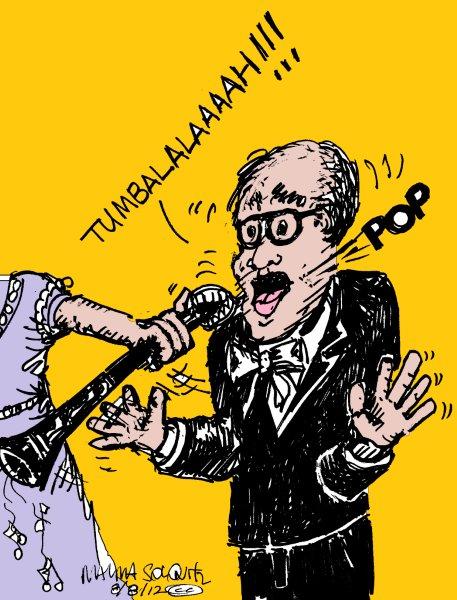
The tent-repair crew arrived shortly, and during a break the crew crawled under the tent and put in extra supports. The mom had the band playing only background music. We sounded like a string quartet at a funeral. We didn’t want anybody to dance, because the floor would collapse even more. We had traveled 500 miles to play tepid tunes like “Jerusalem of Gold” and “Tumbalalaika,” and have my ax yanked. What a letdown.
The dancing picked up after the repair crew fixed the support grid work. Lots of ruach (spirit), and no more assaults on my teeth.
***
SIDE B
Watch out, literature here . . .
THIRTEEN JEWS
IN CONNECTICUT
I.
13 Jews are in line
for omelets
II.
A woman says
“Do I want the mushroom omelet?”
Is she talking to me?
No
To herself
III.
The beauty of the East Coast
Red maples in Connecticut
We’ve come a long way
IV.
Why do I imagine everybody at this wedding
is thin and wearing black?
Because everybody is thin and wearing black
VI.
“You’re from somewhere near Hungary,” I say
“Finland,” the woman says
“Don’t they share a language bond?”
“Distantly”
I’m on a losing streak with accents
IX.
Where is the euphony?
This band is loud
This band is Yiddishe Cup
Turn it down, guys!
XIII.
We are in the Berkshires
The leaves are falling
So are we
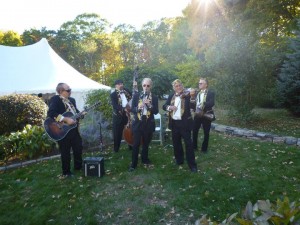
The tent and Yiddishe Cup, Lakeville, Conn., 2010
—
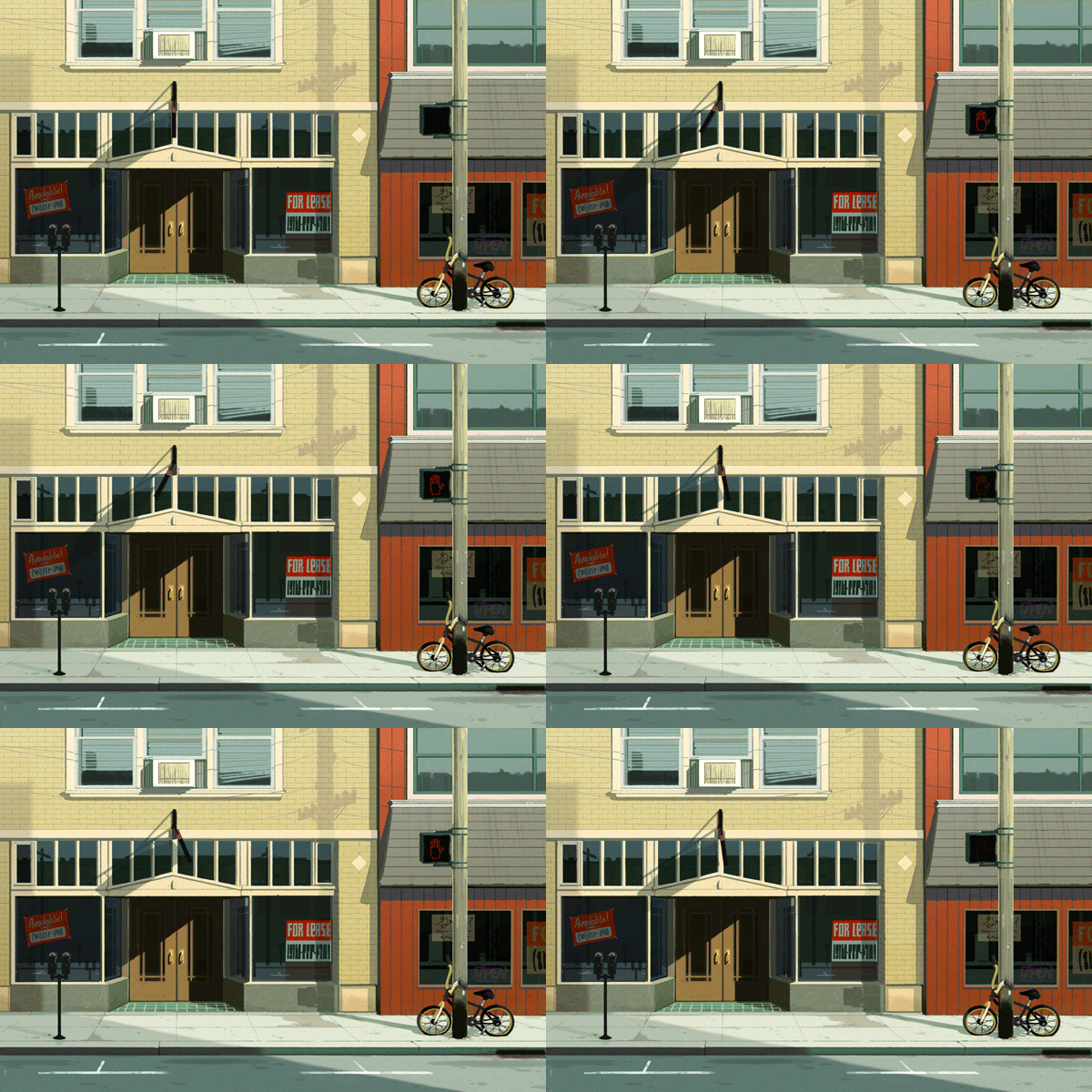 I wrote this op-ed, “Main Street’s Landlord,” for the New York Times, 9/30/12. (Illustration by
Rebecca Mock.)
—
Yiddishe Cup plays for Simchat Torah 7 p.m. Sun., Oct. 7, Fairmount Temple, and 7:15 p.m. Mon., Oct. 8, Park Synagogue. Cleveland.
October 3, 2012 3 Comments
FOR NY TIMES READERS ONLY!
Re: my op-ed in today’s NYT (9/30/12)
Welcome, NY Times readers.
I know you’re busy. You have other things to do.
Like benching the Sunday Times.
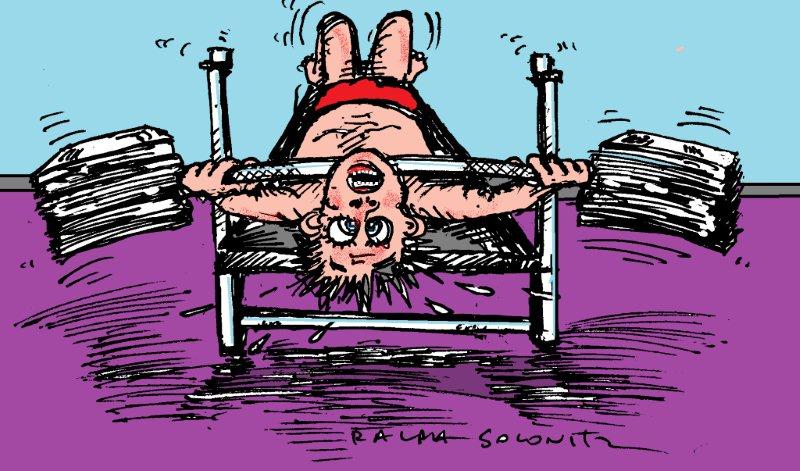
Guys, give me a New York minute!
Are you looking for top-quality real-estate lit? You just found it! (To subscribe, enter your email in the space on the left and click “submit.”)
I’ve been on the NYT op-ed page three times in the past year and a half. I’ve written a million — make that 72 — blog posts about real estate. Check them out here.
Must read amusing posts about real estate now. Yes, you must.
I do a music/prose show, “Dear Landlord.” I’m doing my “Dear Landlord” (aka “Klezmer Guy”) show at The Ark, Ann Arbor, Michigan, on Sat. Feb. 9.
My band, Yiddishe Cup, plays all over the country. When my buildings turn to dust, this song will remain.
Meshugeneh Mambo (Crazy Mambo) by Yiddishe Cup
I post up every Wednesday morning. Subscribe and you’ll get a weekly post. I won’t sell or give away your email address.
I’ll gladly write a book about real estate if a publisher offers me a contract. (TV series would be OK, too!) Title: How to Jam with Your Tenants. The mock-up for the book is here — an article I wrote for City Journal. The article is my best essay.
Thanks for your time and interest.
–Bert Stratton
—
Vid time. Here’s a clip from the “Dear Landlord” show.
—
One more vid, “Should I Rent to a Stripper?” For landlords only!
—
No, one more! Michael Brecker, on electronic wind instrument, jams with economist Milty Friedman. This vid was on my blog last week, too. By Jack Stratton.
September 29, 2012 2 Comments
AFRO-SEMITIC ENCOUNTER
I’m not Orthodox, but I can walk the walk. Walking is a major part of my religion.
Last week my wife, Alice, and I walked home from Rosh Hashanah services. We were at Altamont and Compton roads, in a mostly black section of Cleveland Heights — close to a mostly Orthodox neighborhood.
Three black boys pulled up on bikes. The boys were out of school because Cleveland Heights closes on Rosh Hashanah.
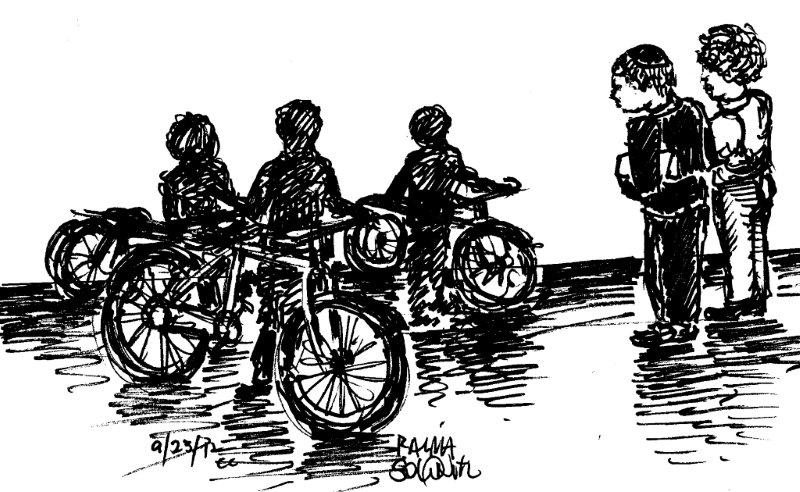
I had on a yarmulke. I like to wear a yarmulke in public once in a while, just to “out” myself.
D’Shawn, leaning on his handlebars, said, “You Jewish?”
“Yes,” I said.
He turned to Alice. “You Jewish?”
“Yes.”
“Total Jewish?” he asked.
“Yes,” my wife said, smiling. She knew D’Shawn. Alice teaches gym in the local public school and knows a lot of kids. “Being Jewish is a good thing. The food is good . . .”
“You go to that building [synagogue] up on Taylor?” D’Shawn asked.
“No, we go to the big temple — the one with the dome — over there,” Alice said, pointing toward Euclid Heights Boulevard.
Alice wears slacks. She doesn’t wear a wig. She doesn’t look Orthodox. (She isn’t — not by a long shot.)
“You breaking Armish?” D’Shawn said.
I said, “Breaking Armish? Did you say ‘breaking Armish’? What’s that mean? You mean ‘breaking Amish’?” Either way, it made no sense to me.

"Breaking Amish"
Breaking Amish is a reality TV show about Amish kids breaking loose in New York. The first episode was on last week. (I Googled this info when I got home.)
D’Shawn apparently thought Alice was “breaking Armish” because she doesn’t look like a member of the local black-hat Orthodox crowd.
—
Side B — “Beer and Coconut Bars,” a classic blog post — is below this video.
This clip may be the most innovative vid on earth. By Jack Stratton. Michael Brecker (on electronic wind instrument) jams with Uncle Milty Friedman.
—
SIDE B
A version of this post ran on CoolCleveland.com last year (12/6/11). This version has more illustrations and pics!
BEER AND COCONUT BARS
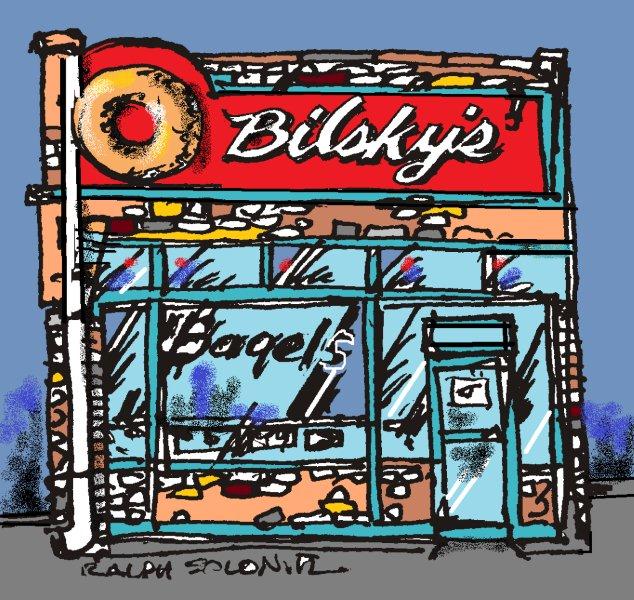
My dad admired bankers. In my dad’s pantheon of great Cleveland Jewish families, the number one clan was the Bilsky family, who made bagels, then went into medicine (son #1), bowling alleys (son #2), and started a bank (son #3). My grandmother used to say “The Bilskys make big bagels out of little bagels.”
 Scott Bilsky, 37, called to book Yiddishe Cup for a Fairmount Temple event. He said 12 Bilskys would be at the temple party.
Dr. Harold Bilsky, son #1, had liked Yiddishe Cup. Harold had grown up with my dad on Kinsman Road. Harold wouldn’t be at the gig. He died in 2007. Leo, son #2, wouldn’t be there either. He died in 1998. I asked Scott, “What about the banker?”

“That’s my grandfather Marvin,” Scott said. “He’ll be there.” Marvin is 90.
At the gig, I talked to Marvin during our breaks. He told me, “Everything I ever did began with a B — baker, banker and builder. Plus brewer.”
That “brewer” part was news to me — Bilsky a brewski?
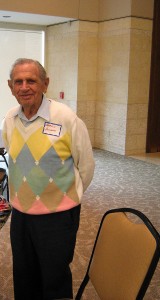
Marvin Bilsky, 2011
“My father bought Cleveland-Sandusky Brewing in 1955,” Marvin said. “There were very few Jews involved in the brewing business then. In the 1960s, Israel came to us for brewing tips and equipment.”
Marvin said there were only four other Cleveland breweries in the 1950s: Carling’s from Canada (“very nice people”); Standard Brewing; Erin Brew, Irish; Leisy’s, German; and Pilsener’s P.O.C., Czech. Bilsky’s brewery bottled Gold Bond beer and Olde Timers Ale.
“We all used to meet on Mondays. I didn’t have any trouble with anybody,” Marvin said.
The last local brewery in town was Carling, which closed in 1984. National breweries killed off the locals.
 My father never taught me about brewskis. He rarely drank; it would have interfered with his worrying. (Old Jewish joke.) I knew about Carling’s from old Cleveland Indians’ radio ads. “Hey, Mabel, Black Label . . . Carling Black Label beer.”
Bilsky’s brewery was just a blip in the Bilsky biz history. The Bilsky business was Bilsky’s Bakery, which had started on Kinsman and moved to Cedar Center in 1948.
Who invented the Cleveland coconut bar?
That was the question I should have asked Marvin. My dad had loved coconut bars (and halvah). I should have asked.
 Marvin was in the phone book . . . .
“Marvin, this is Bert Stratton from Yiddishe Cup, the klezmer band.”
“Thank you for the concert yesterday. You did as well as you could,” he said. “No, seriously, we enjoyed it! To answer your question, I’ve always said my father invited the coconut bar, but — and I have to tell you this — I went to Sydney, Australia, and I went down into the subway there. They have a small subway system. They had coconut bars down there! They didn’t call them coconut bars. [Australians call them lamingtons, says Google.] Where did they get them? Maybe from England. Australia used to be part of England.”
“Marvin, I have a friend, my age — his grandfather was Kritzer’s Bakery on Kinsman — my friend says his grandfather invented the coconut bar.”
“It was my father!” Marvin said, laughing. “Who knows.”
I called my cousin George Becker, whose father had owned Heights Baking on Coventry. George said his father didn’t invented the coconut bar.
Yippee, one less Coconut Bar King to contend with.
Former Clevelander Scott Raab wrote in Esquire (July 2002): “Ask for coconut bars in any Jewish bakery from New Jersey to Los Angeles and you’ll get some version of this: ‘So, you’re from Cleveland . . . We don’t have ’em.’”
September 27, 2012 10 Comments
KILLER FLOORING
1.
My dad, Toby, and I hired Charles Tuncle for kitchen-floor lino jobs. Tunkl means dark in Yiddish, which my dad never failed to point out. Tuncle — the man — was black. Also, he was a killer. He shot a man in a bar.

Armstrong no-wax. Tuncle, 1984. (2010 photo)
When Tuncle was sent to prison, my dad wrote the parole board about Tuncle’s quality vinyl-floor work, and Tuncle got out early. My father never told the tenants — or our building managers — about Tuncle’s record. My dad never said: “You see that guy over there with the utility knife? He’s a killer.”
***
My dad called our business Reliable Management Co.
We should have hauled garbage with a name like that.
When I started an offshoot company, Acorn Management Co., my dad said, “What the hell does ‘Acorn’ have to do with anything?”
“Dad, I live on Oak Road. That’s why.” It was 1976. Environmentalism was the next big thing.
“Nobody is going to understand ‘Acorn,’” he said.
I sometimes call my company “Reliable + Acorn Management companies” now. That makes me feel like a Danish architecture firm.
***
I hired Standard Roofing for a roof tear-off. Standard Roofing went under. Too standard?
My electrician is Jack Kuhl, pronounced “Jack Cool.”
I knew Emin Lyutfalibekov, a handyman. I told him to shorten his name, and he said no way; he was offended. He said he was royalty back in Azerbaijan.
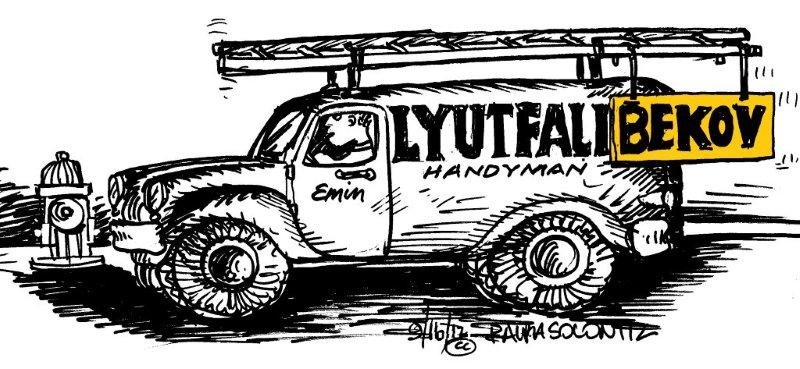
Napoli Construction is a bricklaying firm. Art Gallo, chief mason.
I use Donnelly Heating once in a while. Dan Donnelly. There are four Donnelly heating companies on the West Side: Dan, Tom, William and Original. They must have large Seders.
Lawrence Christopher Construction — that was Larry Vesely. He filled a hole for me for $9,000 — a coal bin that had collapsed beneath a parking lot. The city wouldn’t allow me to fill the hole with plain gravel. The city wanted a reconstructed coal bin that could practically double as a bomb shelter, complete with beams and concrete. Larry said the job would cost $3,000 and take several weeks.
The final bill was $9,000 and the job took nine months. One delay and complication after another.
I could not charge higher rents just because I had a nice coal bin. No tenant cared I had a bomb shelter.
I paid Larry back in nine monthly installments, just to get slightly back at him.
***
Tuncle the floor guy — I miss him. He died at 84 in 2008. A nice guy, except for that night in the bar. He didn’t have any other criminal record.
2.
I was at a gathering of Jewish landed gentry — a landlords’ shabbat — in Pepper Pike.
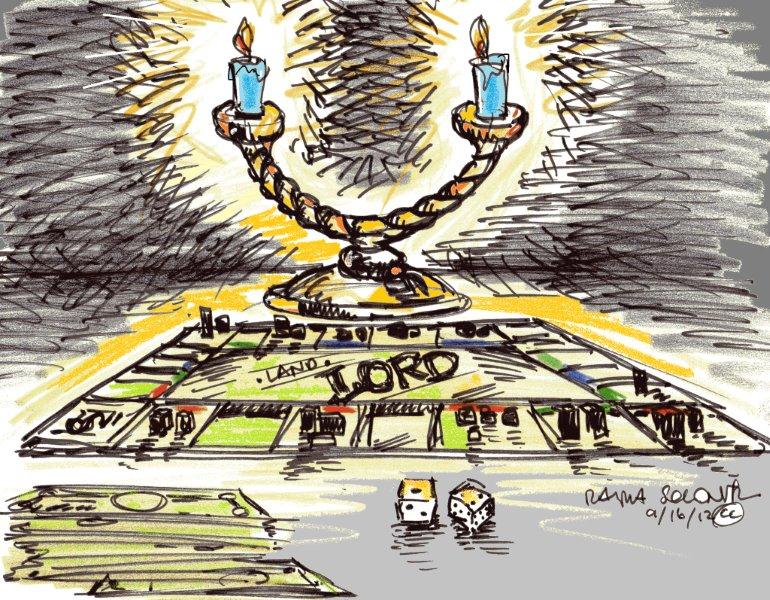
Landlord A — to my right — owned a 17-suiter which her late father had bought in 1955.
Landlord B owned a building his father bought in 1936.
Buy and hold, chaverim. Shabbat shalom.
I owned (with my sister) a building my dad bought in 1965.
In real estate — as in many fields — it’s good to pick the right father.
In college Donald Trump bought his first building, using his father’s money: a 1,200-unit apartment complex in Cincinnati. Trump’s dad owned property in New York’s outer boroughs. Trump’s net worth upon graduating college in 1965 was $1.4 million, in today’s dollars. [Trump, The Art of the Deal.]
Suites, a local real estate mag, did a profile on Marty Cohen, a Cleveland landlord. The article said Marty “couldn’t shake his interest in property management.” Marty worked at a bank for a while, but that wasn’t a good fit. His family owned a 150-unit Parma apartment complex. Maybe that had something to do with Marty finding a good fit in real estate.
Buy and hold, brothers and sisters. Pass the strudel.
3.
Griffith, the state boiler inspector, called.
I said to him, “You’ve been around as long as me!”
“Yes, sir,” he said. “I was around even when your dad was still around! You know, your father was a kinda guy. A good dude. I miss your dad. He was hoping you’d take over the business. And you did!” (My father died in 1986.)
“How long you been around, Griffith?”
“Since 1972. You were just a kid. You were in high school.” (I was in college, Griffith!) “Your dad was a little worried about you, I’ll be honest with you. I hope you don’t take this personally, he thought you didn’t have the fire. You know, he had went through some things that weren’t easy, and he wanted to leave the buildings to somebody who would appreciate them.”
“I gave my father some things to think about, I guess.”
“I’m proud of you. You come around. If he was around, I’d tell him how good you’re doing.”
I didn’t run the family biz totally into the ground.
My epitaph — if I’m lucky: I’m in the Ground But My Business Ain’t.
—
Next week’s post will be on Thursday, not Wednesday, due to Yom Kippur.
—
 Here’s an op-ed I wrote for the Sunday Cleveland Plain Dealer (9/16/12). “High Holidays beckon twice-a-year worshipers.”
September 19, 2012 6 Comments
BREAD TOSS
On the afternoon of Rosh Hashanah, I’m on the Shaker Lakes bridge, hanging out with the Reconstructionist crowd. The Reconstructionist Jews are here for the Tashlikh ceremony. (Tashlikh is Hebrew for “casting off” — the symbolic casting-away-of-sins ceremony. Participants toss crumbs into a river or lake.)
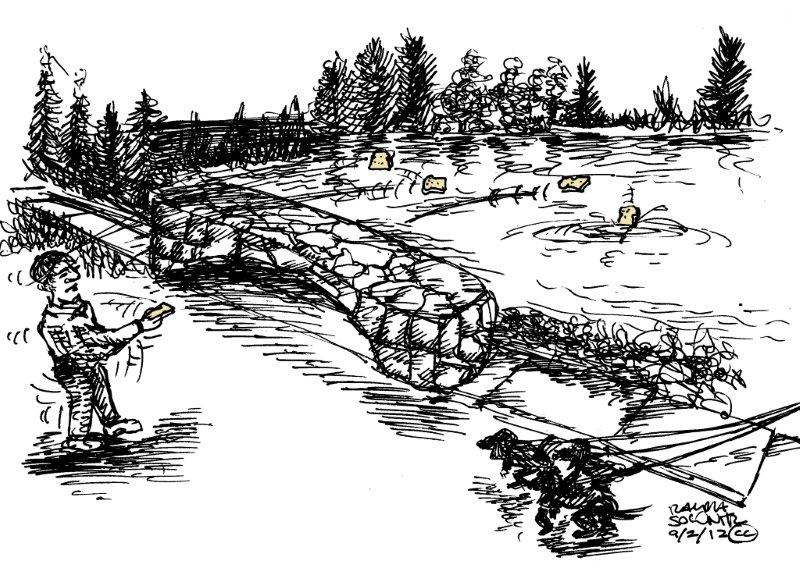
I’m not a Reconstructionist, but I know a lot of the shul members.
I see others too. The guy who comes every day with his dachshunds, and the paraplegic guy, Brian. I run into a Swedish-American who is a convert. He says, “The Swedes taught the Jews about herring when the Swedes conquered Poland.” Good info.
The Recons leave, and a chavurah (small worship group) from a large Conservative synagogue comes through. A member tells me about a bar mitzvah in Minnesota that was too loud. Tell me about it.
The Recons at 3:30, the chavurah at 4:30.
I could go to Park Synagogue at 4:45 p.m., but that would be too much tash-likhing.
The Park Synagogue rabbi, at the morning service, had said, “It’s easy to do the right thing when you’re in shul, but the big test is the day after Rosh Hashanah — the days after the holidays. The routine days. The days when your wife shrinks your favorite sweatshirt, or you run a stop sign.”
Question, rabbi: Am I allowed to be bad on Rosh Hashanah — before I start to be good?
I get a phone message from a new tenant Rosh Hashanah afternoon. He has yet to move in. He needs to talk to me.
I tell my wife, “The guy doesn’t want to move in. I can smell it.”
I can’t resist calling him back. It’s late Rosh Hashanah. Around 6 p.m. I can do business at 6 p.m.
The guy is going to catch a break. I am not going to be vainly ambitious, grossly envious, insanely selfish, or indifferent to him.
“My mother is very sick,” he says. “I can’t move in.” He is 25. His mother is very sick like my mother is very sick; my mother is dead. The guy is lying. Not many 25 year olds have very sick mothers. I could ask him what exactly his mother has. I could ask him for a letter from the doctor. Instead, I say, “I’m sorry to hear about your mother,” and I tell him he won’t get his security back because he kept the apartment off the market for five weeks.
He says, “How about half back?”
I say no.
I have heard too many young people talk about their very sick mothers.
“My God, the soul you have given me is pure.” That’s in the Tashlikh prayer.
My soul is about 49-percent pure. That’s as good as it gets in the real estate biz. The kid found a cheaper place down the street, or moved in with his girl friend. That’s my guess.
—
Footnote: This was Rosh Hashanah, 2010.
—
SIDE B
ROSH HASHANAH PRAYER
There are risks that go along with being active.
Don’t be static. You’ll have plenty time for that when you’re gone.
The devil (yetzer hora) is always working. He don’t take no vacation.
Adapt.
Adapt to a colostomy, mastectomy, prostate surgery, the inability to walk, depression.
Don’t focus on what you’ve lost.
Focus on what’s good and what’s right in front of you: your children, your parents, the memories of your parents, your relatives, your friends, your community.
Life is not for the weak-hearted. Display some willpower! Do not take the short view. Seasons come and go. Get used to it.
This year we will not get wrapped up in things evil, harmful, or petty.
The health of our body is not just our singular “body,” but it’s our “bodies” — the people we work with, the people we love, the people we hang out with, the people we pray with.
Social isolation is not good. We’re all connected, particularly on days like Rosh Hashanah.
This is a day of aspiration and hope.
It’s our only hope.
Do not dwell on the bad. That is too easy.
Aspire to change. Focus.
Praise God.
September 12, 2012 3 Comments
A LOVE SUPREME
The Jazz Temple was a music club in a former Packard showroom at Mayfield Road and Euclid Avenue. Coltrane played there. Dinah Washington too. 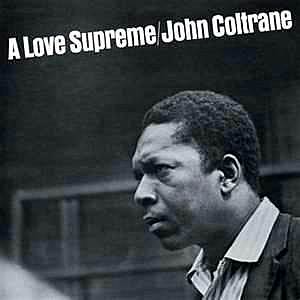 Everybody played there. The Jazz Temple was in business from 1960 to 1963.
I passed the Jazz Temple weekly on my way to Sunday school at The Temple, a Reform synagogue in University Circle, Cleveland.
Rabbi Abba Hillel Silver was the head rabbi at The Temple. Rabbi Silver was very prominent; he spoke at the United Nations, advocating for the establishment of the state of Israel. Rabbi Silver’s son, Danny, was the assistant rabbi. He played football at Harvard and blocked hard for his dad.
The Sunday school kids at The Temple were mostly from Shaker Heights. One kid got a ride in a limo to shul. The driver wore a chauffeur’s cap.
I couldn’t grasp how temple — the word — fit into a non-Jewish setting, like in “Jazz Temple.” Was Jazz a religion too? (Give me a break. I was 10.)
Years later, I met a couple ex-beatniks who had been old enough to go to the Jazz Temple in the early 1960s. They had heard Trane and Ella.
The Jazz Temple was blown up in 1963. Somebody didn’t like the club, or the owner, Winston Willis, a controversial black businessman.
At The Temple, the religious-school kids would attend the last part of the service and hear the sermon. Rabbi Silver looked like God and talked like Him.
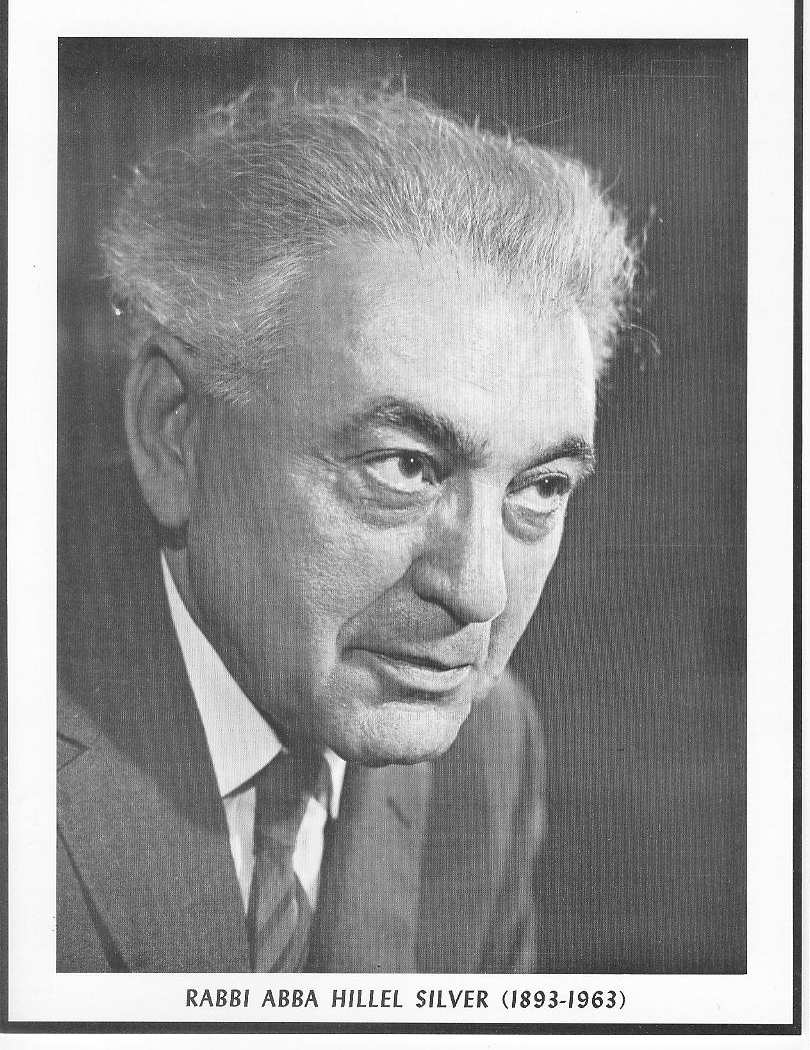 Today, at The Temple East in Beachwood, there is an Abba Hillel Silver memorial study. The rabbi’s desk is laid out like he just stepped out for lunch. He died in 1963.
Rabbi Silver: Live at the Jazz Temple. Interesting.
John Coltrane: Live at The Temple. Another possibility.
A love supreme . . .
A love supreme . . .
—
SIDE B
PRECIOUS
In the arts, if you’re precious, you’re bad. Precious is the worst thing. Precious means you’re dainty and overly refined.
A friend (a former music critic) called all college a cappella music precious.
Harvey Pekar called Willio and Phillio — the Cleveland music-comedy duo — precious. (Willio and Phillio was around in the 1980s.) Willio and Phillio was precious — their stage name for sure. Willio (Will Ryan) went out to Los Angeles to work for Disney, and Phillio (Phil Baron) became a cantor in L.A. They were good, and probably still are.
Yiddishe Cup is precious occasionally. The musicians say “oy vey” too much on stage. I’ve tried to get my guys to stop. I can’t.
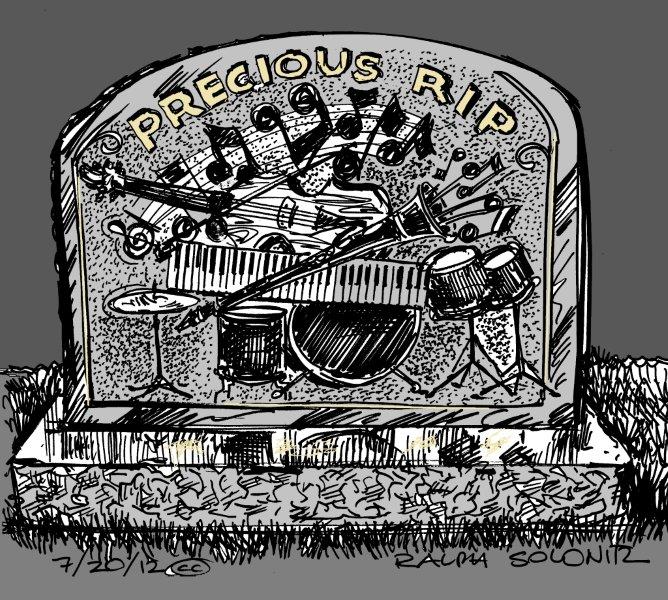
Peter Laughner, a Cleveland rocker, died from drug abuse and alcoholism at 24. He killed himself, basically. (This was in 1977.) He was not precious. He was dead — and funny — about art. He was in the Pere Ubu underground before Pere Ubu was famous.
Suicide doesn’t appeal to me for two reasons: 1) My wife would kill me if I tried it. 2) I want to attend my kids’ weddings and eventually meet my grandkids-to-be.
“Precious” is OK for grandkids. (“Grandkids” is precious.)
—
SIDE C
New construction — Side C — for Michiganders. . .
THE LODGE
Chester Ave., Cleveland, 2011
I drove to Rochester, Michigan, which is not as cool as Rochester, New York, but it does have a small-town charm.
I’ve seen Father Coughlin’s former church in Royal Oak, Michigan.
I’ve been to Detroit many times.
My wife, Alice, said, “Detroit has very long roads.”
She probably meant Woodward, Gratiot and Telegraph.
Detroit also has the Lodge. Elmore Leonard mentions the Lodge in his books, like, “The gambling casino, Mutt, you can’t fucking miss it, over by the Lodge freeway.”
A couple Cleveland freeways and bridges have names, like the Bob Hope Memorial Bridge, but nobody ever uses the names.
I stayed at a hotel near the Silverdome, which looked like a big pillow. (The stadium did.) A Detroiter told me the Silverdome sold for about $200,000. A stadium for the price of a California carport.
Who was John C. Lodge? Probably a labor leader. [No, the mayor of Detroit in the 1920s.]
Detroit is like Cleveland. Detroit has the Eastern Market; Cleveland has the West Side Market. Detroit has downtown casinos. Now Cleveland has a downtown casino.
Metro Detroit has a few more Jews than Cleveland. And probably more Arabs, Poles and Ukrainians. And more blacks.
People who wear Tiger caps are cool, as are Indians cap wearers.
What about Berkley, Michigan? Is that worth a visit?
Elmore Leonard eats at the Beverly Hills Café. I wonder if that’s part of the Beverly Hills Café chain, or an independent restaurant in Beverly Hills, Michigan.
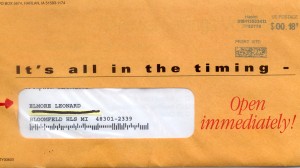 I wonder if Elmore Leonard spends his winters in Detroit. I bet he doesn’t. He writes a lot about Florida.
I have some Elmore Leonard junk mail.
City Primeval: High Noon in Detroit. That’s worth reading.
Maple means 15 Mile. Big Beaver is 16 Mile.
What about Oakland University? Does the university have Bobby Seale barbecue sauce in the cafeteria?
I live only three and a half hours from Berkley, Beverly Hills and Oakland.
—
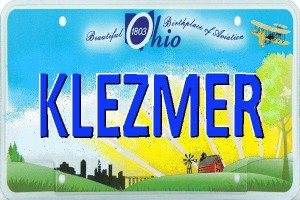 Yiddishe Cup pulls into Motown Sunday. See us at Cong. Beth Shalom, Oak Park, Mich.,
2 p.m., Sept. 9. Open to the public. Concert info here.
September 5, 2012 7 Comments
TICKTIN
Harold Ticktin, 85, writes a weekly column for the Cleveland Jewish News on Yiddish. For instance, he writes about what balabuste means, or balegole. (Female boss and wagon-driver.)
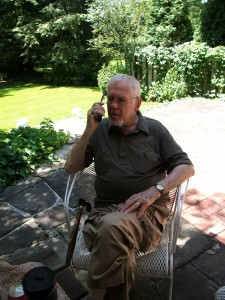
Harold Ticktin, Shaker Heights, 2012
Also, Harold occasionally reflects on early-20th century leftist politics for magazines such as Jewish Currents.
I asked Harold for a couple Yiddish translations. I was in his backyard in Shaker Heights. I wanted to know Yiddish permutations on “How’s it going in?” — everything from “How are you?” to “What’s happnin’, man?” Ticktin gave me some options, none perfect, and concluded, “Translation is treason.”
He continued, “Listen, there was this pharmacist who did a big business in trusses – you know what a truss is?”
“Yes.”
“The pharmacist’s slogan was Ayer kile iz undzer gedile — your hernia is our pleasure. I told the pharmacist that was a horrible translation. He told me to come up with a better one. I said, ‘Your rupture is our rapture.’ Wouldn’t that make a great bumper sticker for an abdominal surgeon?”
“Did you make that up — your rupture is our rapture?” I said.
“That’s a true story. It’s an absolutely true story.”
Ticktin is a retired workers’ comp lawyer. He can speak decent Italian, French and Spanish, as well as Yiddish. One of his favorites translations is All Screwed Up, he said, for the Lina Wertmuller film Tutto a posto e niente in ordine, which literally means “everything ready, nothing works.” “You don’t translate, you render,” Ticktin said.
Ticktin continued, “James Thurber ran into a woman in Germany who said, ‘I love your work in German.’ Thurber said, ‘Yes, it’s true, my work loses something in the original.’”
Ticktin lives three miles from his old stomping grounds — the Kinsman neighborhood. Harold grew up on E. 154th Street, Cleveland, hard by the Shaker Heights-Cleveland line. He said Shaker had been “hakodesh hakadashim [the Holy of Holies] — the other.” Shaker had been nearly unapproachable, like the inner sanctum at the Temple in Jerusalem. “I didn’t know anybody in Shaker. Maybe one person.”
Kinsman Road was Ticktin’s main artery. He said, “I walked [down Kinsman] from 154th to E. 140th to observe the class struggle. My father was a Yankee. He came over here when he was two. He liked baseball. What did he know about politics? He knew this: Roosevelt was great and Hitler was bad.”
At E. 146 Street, Harold met Peter “The Brain” Ostrovsky. “I was converted to communism by Ostrovsky on the train to the Philly Navy Yard in 1946. I was converted just west of Pittsburgh.”
The upshot: “I saw the God who was to fail, though I still have a warm spot for Marx, for his Lincoln correspondence,” Harold said. “I’m a member of the extreme center now.”
I wanted Ticktin to give me a tour of Kinsman — the proste, working-class Kinsman of his youth. “How about it?” I said. “Now?” Ticktin agreed. We got in my Lolly the Trolley — my Mercury Sable.
***
Stop 1. Woodhill Park at E.116th. Ticktin: “I remember when I was 10 years old [1937] at Woodhill. It was a tremendous swimming pool. Everybody got out of the water. Why? Because Frieda Katz, a geferlikher (dyed-in-the-wool) communist took a swim with a black kid. The place cleared out. This was Frieda Katz from Katz’s Deli at E. 147th and Kinsman.”
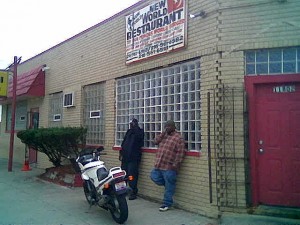
Formerly Seiger's
2. Seiger’s deli at 118th. “I knew Hymie Seiger best. He went off to yeshiva in junior high. He just left. I didn’t even know what a yeshiva was.”
3. E. 121. “This was where I attended my one Seder as a child. On that street. Very important.” Ticktin eventually became president of his shul.
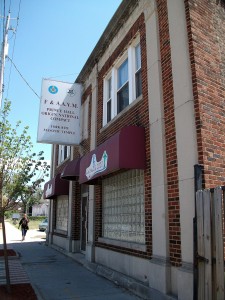
Council Educational Alliance building, now a Masonic hall
4. 13512 Kinsman, the Council Education Alliance. “The apex and GHQ [general headquarters] of my youth. The Communist Club met there.” It was a settlement house.
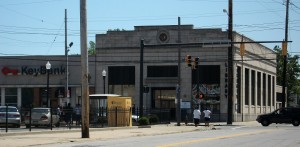
Cleveland Public Library - Mt. Pleasant branch
“In the 1936 election, the Communist Club painted ‘Vote Communist’ in blue on the library at E. 140th. The library had been a bank before. Some members of the club got mad because the graffiti was blue. They said, ‘We need to paint it red.’ Ostrovsky went back to re-paint it and got caught. He was defended by Yetta Land, who handled all the communists. I don’t think Ostrovsky was punished too severely; he was a juvenile.”
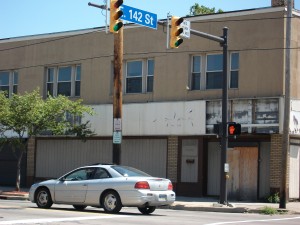
Formerly Spumoni's (middle store)
5. E 142 and Kinsman. “We called this place Spumoni’s. The real name was Giaimo’s — an ice cream place. The communists met across the street above the Woolworth’s, which is long gone.
“On Saturday nights all the single Jewish guys would hang out here at Spumoni’s and greet each other Marty-style, like, ‘Whadaya want to do, Marty?’ This went on up through the 1940s and 1950s.”
“What’s Marty-style.”
“Like Marty, the movie with Ernest Borgnine. You don’t remember it?”
“No.”
“Single Jews guys — and married Italians — hung out, to go out on the town. I always envisioned a cowering Italian wife in the kitchen back home saying, ‘Tony, when you gonna be home?’”
6. E. 154th / the Shaker Heights line. “Hakodesh — the other,” Ticktin said. “I was in New York once and stopped in at YIVO [Jewish Research Institute] for a list of places European Jews had vacationed before the war. I needed this for a speech in Yiddish. They asked me, ‘You mean intellectuals? Peasants? We’ll get back to you.’ They didn’t get back to me. A couple weeks later, I’m at a gathering of Jews and Poles in Cleveland, an American Jewish Committee meeting, and I meet the speaker, a prominent Polish Jew, Lucjan Dobroszycki, the editor of the Chronicle of the Lodz Ghetto. I ask him about vacation spots before the war. He looks at me and says, ‘This is the second time in two weeks somebody has asked me this question.’ End of the line, Lucjan Dobroszycki — don’t ask me how to spell that.”
7. I drive Harold Ticktin into Shaker Heights. Another end of the line.
—
The photos, above, are from 2012, except the former Seiger’s deli pic, which is from 2010. Seiger’s — later New World Restaurant — is now boarded up.
—
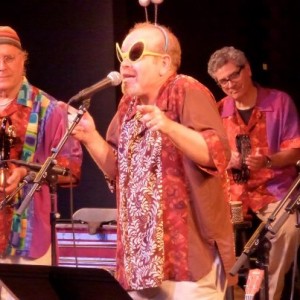 Yiddishe Cup plays a concert in Metro Detroit.
2 p.m. Sun. SEPT 9
Congregation Beth Shalom
Oak Park, Michigan
August 29, 2012 10 Comments
